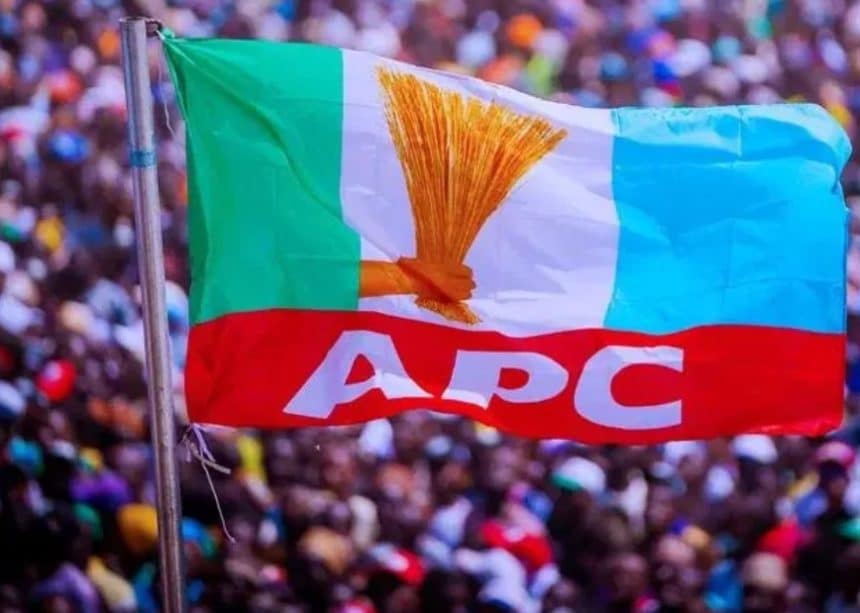
The All Progressives Congress Presidential Campaign Council has asked African Democratic Congress presidential candidate Atiku Abubakar to provide details of the legal, financial and operational framework for his proposed subsidy on locally refined petroleum products.
The council said Atiku needed to explain how government support for domestic refineries would translate into lower petrol prices for consumers without conflicting with Nigeria’s existing deregulated petroleum market.
Its spokesman, Dele Alake, raised the questions in a statement issued in Abuja on Sunday following Atiku’s renewed advocacy for what he has described as a “production subsidy”.
Atiku has said his proposal would support petroleum products refined in Nigeria rather than subsidise imported fuel. He has argued that reducing production costs for domestic refiners could help lower prices while encouraging local refining and investment.
The former vice-president has also said the proposed scheme would operate within a fixed spending limit, require National Assembly approval and be subject to independent audits.
However, the APC campaign council questioned how savings given to refiners would be guaranteed to reach consumers at filling stations.
It asked whether companies benefiting from the subsidy would be required to sell petrol at government-prescribed prices and, if so, under what legal authority such pricing would be imposed.
The council cited Section 205(1) of the Petroleum Industry Act 2021, which provides for wholesale and retail prices of petroleum products to be determined by unrestricted free-market conditions, subject to provisions in the law.
“If the answer is yes, he should identify the legal framework under which the government would impose that price condition and explain how it would operate consistently with the Petroleum Industry Act,” the council said.
It added that if refiners were not required to sell at prescribed prices, Atiku should explain how public financial support would necessarily result in cheaper petrol for consumers.
The campaign council also demanded details of the projected cost of the policy, the volume of petroleum products that would qualify, the source of funding and measures designed to prevent diversion, smuggling and fraudulent claims.
It said preferential pricing of crude supplied to domestic refineries could have implications for revenue accruing to the Federation and should therefore be fully costed before implementation.
The council also questioned whether the proposed intervention would require amendments to the Petroleum Industry Act, arguing that approval of funding by the National Assembly might not by itself address all regulatory issues associated with the scheme.
Atiku proposes production-based subsidy
Atiku has sought to distinguish his proposal from Nigeria’s previous petrol subsidy system, which largely involved government support intended to keep the retail price of imported petrol below its market cost.
Under his proposal, government support would instead be tied to petroleum products refined domestically.
Atiku has said qualifying refineries would not be forced to sell fuel below production cost. His campaign has proposed measures including a spending ceiling, independent verification, electronic monitoring, domestic supply obligations and regular audits.
The APC campaign council nevertheless asked him to reconcile the proposal with his previous support for downstream deregulation and subsidy removal.
It recalled that Atiku had criticised the former petrol subsidy system in 2022 and supported its removal before announcing in August 2026 that he would restore subsidy in a different form.
The council said Atiku should explain how the new arrangement would avoid problems historically associated with petroleum subsidies, including diversion, smuggling and fraudulent claims.
APC points to CNG programme
The campaign council said the Tinubu administration was pursuing compressed natural gas and electric mass-transit programmes as alternatives for reducing transport costs rather than restoring petrol subsidy.
According to the Federal Government, more than 120,000 vehicles have been converted to CNG under government-supported programmes, with further conversions undertaken privately.
President Bola Tinubu has also said Nigerians should begin to see further reductions in transport costs from 1 October as federal and state governments expand alternative-energy transport programmes.
The APC campaign council called on Atiku to publish a detailed policy document setting out the legal basis, projected cost and implementation mechanism of his proposal ahead of the 2027 election.
Atiku, meanwhile, maintains that his plan would be a targeted intervention designed to support Nigerian refining, reduce production costs and ultimately make petroleum products more affordable to consumers.
Related in Politics

Saheed Popoola: a proven servant ready to deliver for Kwara South
Council chairman, commissioner and two-term lawmaker, Prince Saheed Popoola has served Offa and Kwara State at every level of government. Now the PDP’s consensus candidate for Kwara South, he brings a lifelong commitment to the grassroots, a pioneering voice for local government autonomy and the experience to deliver from day one in the Senate.

Youth Group Launches Initiative to Train 300,000 Volunteers Against Electoral Violence Ahead of 2027 Polls
The original report identifies both Blessing Oyefeso and Aminu Shagari as chairmen of the YEGO National Stakeholders Steering Committee. Their respective designations should be verified before publication. The original also attributes statements to Dickson Akor through two different representatives; those attributions have been retained pending confirmation.
Kogi Governor Warns Youths Against Electoral Violence and Political Thuggery
Kogi State Governor Ahmed Usman Ododo has warned youths against electoral violence and political thuggery, urging them to reject financial inducements, resist political manipulation and pursue productive opportunities, stressing that no political ambition is worth the loss of human life.