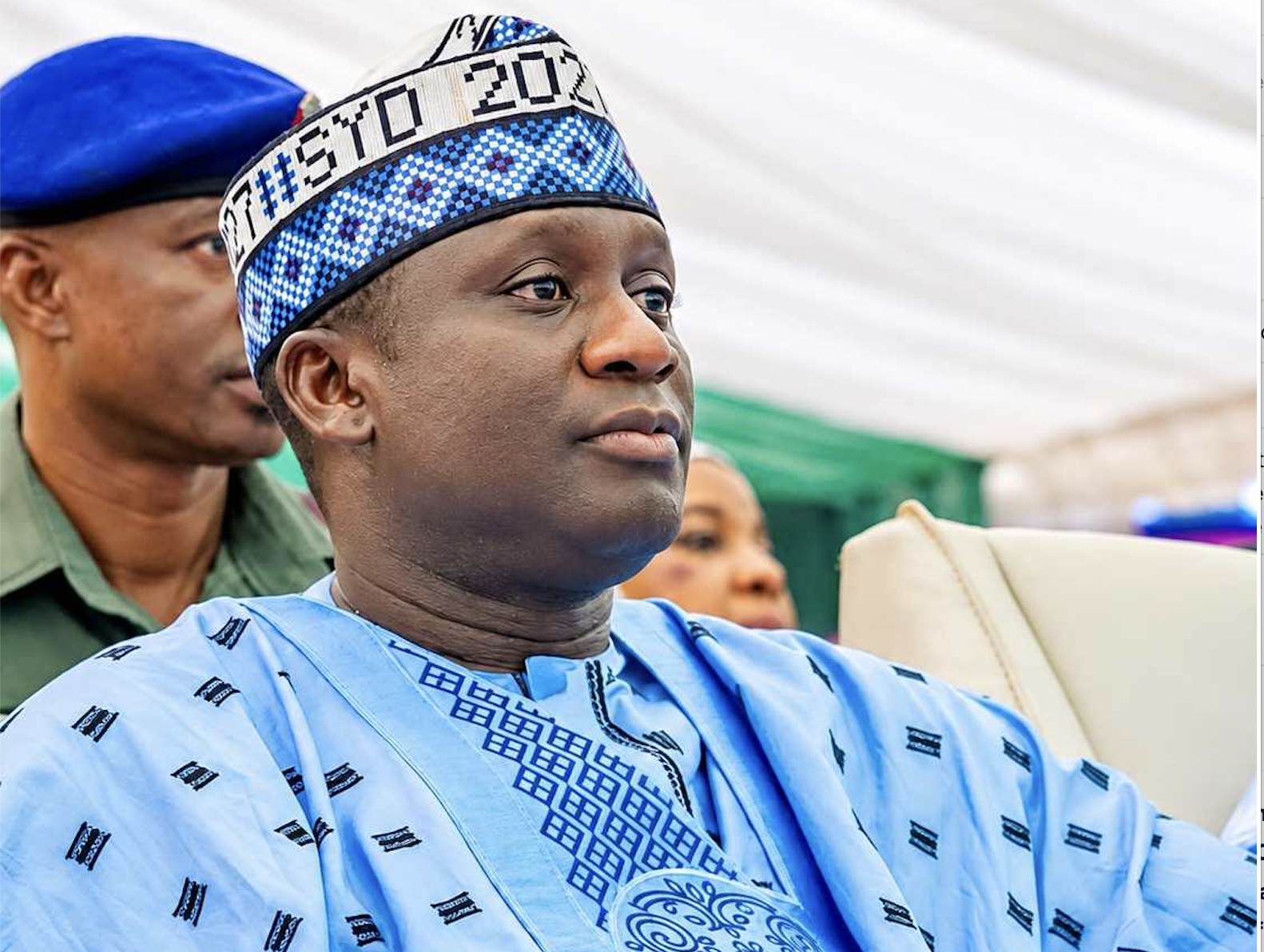
He became Speaker at 34. At 41, he wants the top job. Salihu Yakubu-Danladi could become the first elected governor from Kwara North since 1999. First he must convince voters that seven years of harmony with the executive was leadership, not loyalty.
Rt Hon Engr Salihu Yakubu-Danladi, widely known as SYD, has spent more than seven years presiding over the Kwara State House of Assembly. On 6 February 2027, under the timetable revised by the Independent National Electoral Commission, he will ask the people of Kwara to make him governor.
He is the candidate of the governing All Progressives Congress, with Bello Mubarak Salau as his running mate. He brings to the contest an engineering degree, a long apprenticeship in grassroots politics and two terms as Speaker. He also brings two questions that will follow him all the way to polling day: whether the Assembly he led was independent enough, and whether he would govern in his own right.
A son of Borgu
Danladi was born on 31 May 1985 in Gwanara, in Baruten Local Government Area, deep in Kwara's northern senatorial district near the border with the Republic of Benin. He is a son of the late Alhaji Salihu Aliyu, who held the traditional title of Tafarkin Borgu.
That birthplace matters more than usual in this election. Since the return to civilian rule in 1999, Kwara North has never produced an elected governor. The office has rotated between politicians from the central and southern districts, and the north's grievance has hardened into a campaign issue in its own right.
Supporters of rotation argue that a governor from the north would strengthen the sense that every part of the state shares in power. Critics reply that zoning is no substitute for competence, and that voters should choose the best candidate wherever he comes from. Danladi's candidacy forces that debate onto the ballot.
Engineer, student leader, organiser
His schooling took him from the local primary school in Gwanara to Baptist Grammar School, Okuta, and St Anthony Secondary School, Ilorin, where he finished in 2001. He then studied Electrical and Electronic Engineering at Kaduna Polytechnic, earning a National Diploma in 2006 and a Higher National Diploma in 2008, both with Upper Credit.
He served his National Youth Service year at the National Water Resources Institute in Kaduna, then joined the staff of the Federal University of Technology, Minna, in 2010. He stayed eight years, and while there completed a Bachelor of Engineering degree in Electrical and Electronic Engineering with Second Class Upper honours in 2016. He resigned in 2018 to run for office.
Politics began on campus. At Kaduna Polytechnic he was secretary, then vice-president, of the National Union of Baruten Students, and secretary of the Kwara State students' association. By 2011 he was a youth coordinator in Kwara North for Muhammadu Buhari's campaign under the Congress for Progressive Change. In 2015 he worked in Kwara North for the campaign of Engr Yinusa Yahaya, then on the platform of the Peoples Democratic Party. It was a classic grassroots apprenticeship: student politics, mobilisation, and a willingness to move between camps.
Seven years in the Speaker's chair
In 2019 he won the Ilesha-Gwanara seat in the House of Assembly on the APC platform. On 11 June that year, his colleagues elected him Speaker of the Ninth Assembly. He was 34, among the youngest presiding officers of any state legislature in Nigeria. Re-elected to the House in 2023, he was chosen again as Speaker of the Tenth Assembly.
His entire speakership has run alongside the governorship of AbdulRahman AbdulRazaq, and that relationship is the crux of any assessment of his record. Kwara has avoided the open warfare between governor and Assembly that has paralysed states such as Rivers. Danladi presents that stability as an achievement, and as proof that he can manage institutions.
His critics see it differently. They have long described the Kwara Assembly as a rubber stamp. Danladi has rejected the label. In 2023 he told journalists in Ilorin that "legislators are not elected to fight or oppose the executive arm of the government", and urged the press to drop the charge. He returned to the theme this month, insisting the House had not been a mere extension of the executive.
Voters will have to decide which view is right. The fair test is not whether the Assembly quarrelled with the governor, but whether it scrutinised budgets, questioned spending and amended bills when the public interest demanded it.
Boreholes in Borgu
At home in Baruten, Danladi's reputation rests largely on water. His constituency office reported in June 2020 that more than 90 projects had been carried out in Ilesha-Gwanara, funded, it said, from his salary and allowances. An Assembly account describes at least 60 hand-pump and motorised boreholes in communities such as Tebetebere, Goro-bani, Gobo-tibu, Beteru, Sinau, Gaawera, Suuru and Tumbuya, places where families had long fetched water from streams.
In rural Borgu, a working borehole is no small thing. It means fewer hours carrying water, fewer children kept from school to do it, and less disease.
But these figures come from his own office and the Assembly he leads. They have not been independently audited, and some accounts circulating online put the number of boreholes far higher. A candidate seeking executive office should welcome an independent check of what was built, what still works and what it cost.
A contested nomination
His path to the ticket was anything but smooth. In the week of the APC primary in May, Governor AbdulRazaq first endorsed Abdulfatai Seriki-Gambari as his preferred successor, then switched his support to Danladi after consultations within the party, Premium Times reported. Supporters of Seriki-Gambari besieged the party secretariat in Ilorin and the primary was postponed by a day.
When it was held on 22 May, under a committee chaired by the former minister Musiliu Obanikoro, Danladi polled more than 94,000 votes and defeated a field that included a serving senator. The party's screening process had earlier been thrown into confusion when more than 100 aspirants were disqualified and then cleared, according to the ICIR.
The manner of his emergence fuelled claims from critics that he would be a proxy for the outgoing governor. The state APC chairman, Prince Sunday Fagbemi, dismissed the charge as unfounded, insisting the primary was free and fair. Youth groups from all three senatorial districts have since endorsed him, though such endorsements reflect the groups concerned rather than the state as a whole.
What voters should ask
Danladi says his priorities are security, human capital development and infrastructure. Few in Kwara would quarrel with that list. Insecurity threatens farms and roads, especially in the north; schools and hospitals need investment; and the state needs power, water and passable roads.
The list is not the hard part. The hard part is the detail: how, with what money and by when. Voters are entitled to ask him four questions before February.
How, specifically, will he secure the forests and highways of Kwara North and the rest of the state? How will he pay for his programmes, and what will he cut? What did his Assembly do to hold the executive to account, and what would he expect a future Assembly to do to him? And how will he show that, if elected, he will govern as his own man?
Salihu Yakubu-Danladi's rise from Gwanara to the Speaker's chair is a genuine story of youth, ambition and grassroots persistence. Whether it ends in Government House now depends on whether he can answer those questions convincingly.