Kwara State has recorded a broad range of infrastructure, education, healthcare, revenue, and workers’ welfare initiatives under Governor AbdulRahman AbdulRazaq, who has now spent seven years in office.
AbdulRazaq assumed office in May 2019 at a time when the state was grappling with infrastructure deficits, salary arrears, pressure on public finances, and demands for improvements in education, healthcare, and public service delivery.
Seven years on, the administration says it has implemented 1,353 projects across different sectors. The figure is a government-reported aggregate and is best considered alongside individual project records and other available reports.
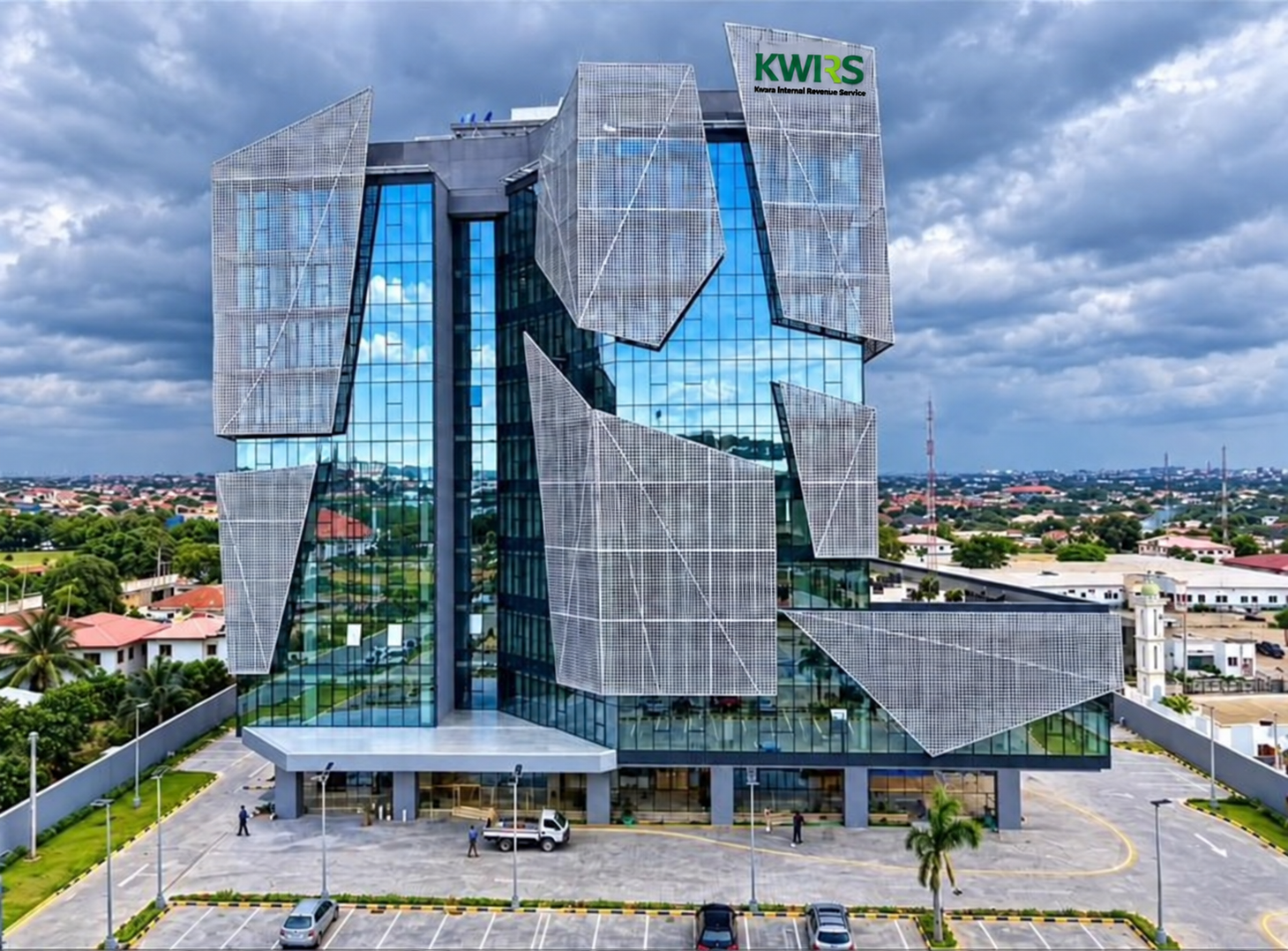
One of the most recent projects is the 11-story Kwara Revenue House, commissioned by Vice-President Kashim Shettima on 16 September 2026.
The building brings major departments of the Kwara State Internal Revenue Service, KW-IRS, under one roof and is designed to accommodate about 600 workers while providing a one-stop centre for taxpayers.
Roads and rural connectivity
Infrastructure has remained one of the most visible areas of the administration’s activities.
Several major roads in Ilorin have been reconstructed or rehabilitated, including Wahab Folawiyo Road, Ibrahim Taiwo Road, Sulu Gambari Road, Oja-Oba Road and the Yebumot-Adeta-Oloje corridor.
The administration has also delivered flyover projects, including the Tanke University of Ilorin Flyover, commonly associated with the General Tunde Idiagbon Flyover, and the Unity Flyover.
Beyond the state capital, rural road development has featured prominently.
Under the Rural Access and Agricultural Marketing Project, RAAMP, the state government says 209.77 kilometers of rural roads have been constructed, rehabilitated, or upgraded.
The programme is expected to improve movement between farming communities and markets, particularly in agricultural areas.
The state government has also pursued federal intervention on major roads.
In 2026, the Federal Government approved about ₦883 billion for road and bridge projects affecting Kwara, including sections of the Ilorin-Ogbomoso and Ilorin-Omorin-Egbe-Kabba-Obajana corridors.
Education reforms
Education has been another major area of government intervention.
One of the administration’s flagship programmes is KwaraLEARN, a technology-supported basic education initiative designed to improve teaching, school management, and learning outcomes.
The state government has reported increased enrolment under the programme and its expansion into more local government areas.
School rehabilitation, teacher recruitment, and training have also formed part of the education programme.
By 2025, the government said 8,601 teachers had been recruited to address shortages in public schools.
At the tertiary level, the administration has supported the development of institutions, including the Kwara State University of Education, while investments have also been made in information and communications technology infrastructure.
Healthcare investment
Healthcare has also received attention, with the administration pursuing hospital rehabilitation, diagnostic infrastructure, and specialised medical services.
Among the major projects is the development of the Kwara State University Teaching Hospital.
Other interventions include intensive care facilities, diagnostic services, and the rehabilitation of healthcare centres.
A cancer treatment centre supported by the Abdul Samad Rabiu Foundation has also been added to the state’s healthcare infrastructure.
Water supply
The government has undertaken rehabilitation and development of water infrastructure in several communities.
Projects include works at Jebba, Zambufu and Otte/Budo-Egba waterworks, as well as interventions in Lafiagi, Omu-Aran and Oyun.
The administration’s 2021 budget statement also reported the rehabilitation of 921 boreholes and the drilling of 83 new ones.
Salaries, minimum wage, and promotion
Workers’ welfare has been another major area of policy focus.
The administration inherited salary arrears affecting some categories of workers, particularly local government and State Universal Basic Education Board personnel.
In February 2024, the government announced that inherited arrears owed to SUBEB teachers and local government workers had been cleared.
It said at least ₦5.5 billion had been spent between January 2020 and January 2024 on inherited salary obligations involving teachers, local government workers and pensioners.
Claims that local government workers had previously received salaries in percentages were made by the AbdulRazaq administration and reported at the time, rather than independently established in the source material.
More clearly documented is the implementation of national minimum wage agreements.
Following the approval of a ₦70,000 national minimum wage by the Federal Government in 2024, Kwara announced implementation from October of the same year, including consequential adjustments negotiated with organised labour and other stakeholders.
The administration had previously implemented the ₦30,000 minimum wage.
In March 2023, the Kwara State leadership of the Nigeria Labour Congress publicly acknowledged the implementation of the ₦30,000 minimum wage, consequential adjustments for workers on Grade Level 07 and above, regular salary payments and promotions.
The government has also provided financial backing for promotion exercises.
In 2026, it approved cash backing for the 2025 Teaching Service Commission promotion exercise.
TESCOM said outstanding promotion issues dating from 2015 to 2020 had been addressed through successive exercises extending to 2025.
The government had earlier reported that more than 9,000 civil servants were promoted between 2019 and 2021, while more than 2,000 local government workers received 2022 promotion letters in 2023.
Revenue reforms
The commissioning of the Kwara Revenue House has placed renewed attention on the state’s revenue administration.
According to information presented by KW-IRS, the building was financed from savings on allocations previously used for consultants.
The agency said the facility would consolidate its major departments and improve taxpayer services.
KW-IRS figures presented at the commissioning showed internally generated revenue of ₦35.45 billion in 2022, ₦56.42 billion in 2023, ₦69.19 billion in 2024 and ₦92.19 billion in 2025.
The 2025 figure represented an increase of about ₦23 billion from the previous year.
The agency also said its taxpayer database had grown from fewer than 50,000 records to more than 1.4 million.
Industry and jobs
The administration has also pursued industrial and investment projects aimed at expanding the state’s economy beyond its traditional dependence on agriculture and the public sector.
The Kwara Garment Factory, commissioned in September 2026, is designed to employ about 4,000 people when operating at full capacity.
Other initiatives include the Shea Butter Factory in Kaiama, proposed industrial parks and efforts to attract private investment.
In January 2026, the state government announced about $35 million in proposed Chinese investments, including a reported $20 million lithium processing project and a pharmaceutical investment valued at more than $15 million.
These figures represent announced investment commitments and should not be interpreted as the value of investments already fully delivered or the number of jobs already created.
Technology and innovation
The Ilorin Innovation Hub forms part of the administration’s efforts to expand technology and digital entrepreneurship.
The government has also invested in creative-sector infrastructure and explored electric mobility in collaboration with Kwara State University, including the conversion of conventional vehicles to electric-powered models.
Tourism, hospitality and urban renewal
Tourism and cultural infrastructure have also featured in government plans.
The Ilorin International Conference Centre, with a reported 1,500-seat auditorium and hotel facilities, is intended to support conferences and major events.
The redevelopment of Kwara Hotel is another hospitality project undertaken by the administration.
The government has also supported cultural and tourism-related activities, including the Ilorin Grand Durbar, while the 70-metre Unity Flagpole has become a prominent feature of the Ilorin skyline.
Housing and planning
Housing and urban development have also received attention.
In 2026, the state acquired a 132-unit National Housing Programme estate at Ogbondoroko.
The administration has also pursued a new Ilorin City Master Plan and proposed a large-scale Smart City project.
The plans are intended to respond to Ilorin’s growing population and long-term urban development needs.
Seven years on
The record of the AbdulRazaq administration between 2019 and 2026 spans physical infrastructure, public-sector management, education, healthcare, revenue reform, industrial development and economic diversification.
Its long-term assessment, however, will depend not only on the number of projects commissioned but on whether those projects deliver sustained benefits.
Roads will ultimately be judged by their durability and economic value. Schools will be judged by learning outcomes. Hospitals will be judged by the quality of healthcare they provide, while industrial projects will be measured by the jobs and economic activity they sustain.
Similarly, increases in internally generated revenue will be judged by how effectively additional resources translate into improved public services.
After seven years, the central question is therefore no longer simply what has been built, but which of the projects and reforms will continue to serve the people of Kwara State long after the present administration leaves office.
That will ultimately form part of the measure of the administration’s legacy.
Related in Economy
Nigeria, AfDB to Review $5.1bn Project Portfolio, Strengthen Development Cooperation
Nigeria and the African Development Bank have agreed to review a $5.1 billion portfolio covering 52 projects, with discussions focusing on faster project delivery, lower borrowing costs, increased private investment and stronger development cooperation.
World Bank Group to Mobilise $5.79bn in Private Investment for Nigeria in 2026
The World Bank Group plans to mobilise up to $5.79 billion in private investment for Nigeria in 2026, targeting digital infrastructure, agriculture, telecommunications, and small businesses to expand employment, strengthen productivity, and support sustainable economic growth.
IMF Urges Nigeria to Strengthen Cash Transfers Amid Rising Food and Energy Prices
The International Monetary Fund (IMF) has urged Nigeria to expand targeted cash transfers to vulnerable households amid rising food and energy prices, while calling for stronger fiscal management, improved revenue collection and policies to safeguard economic stability.