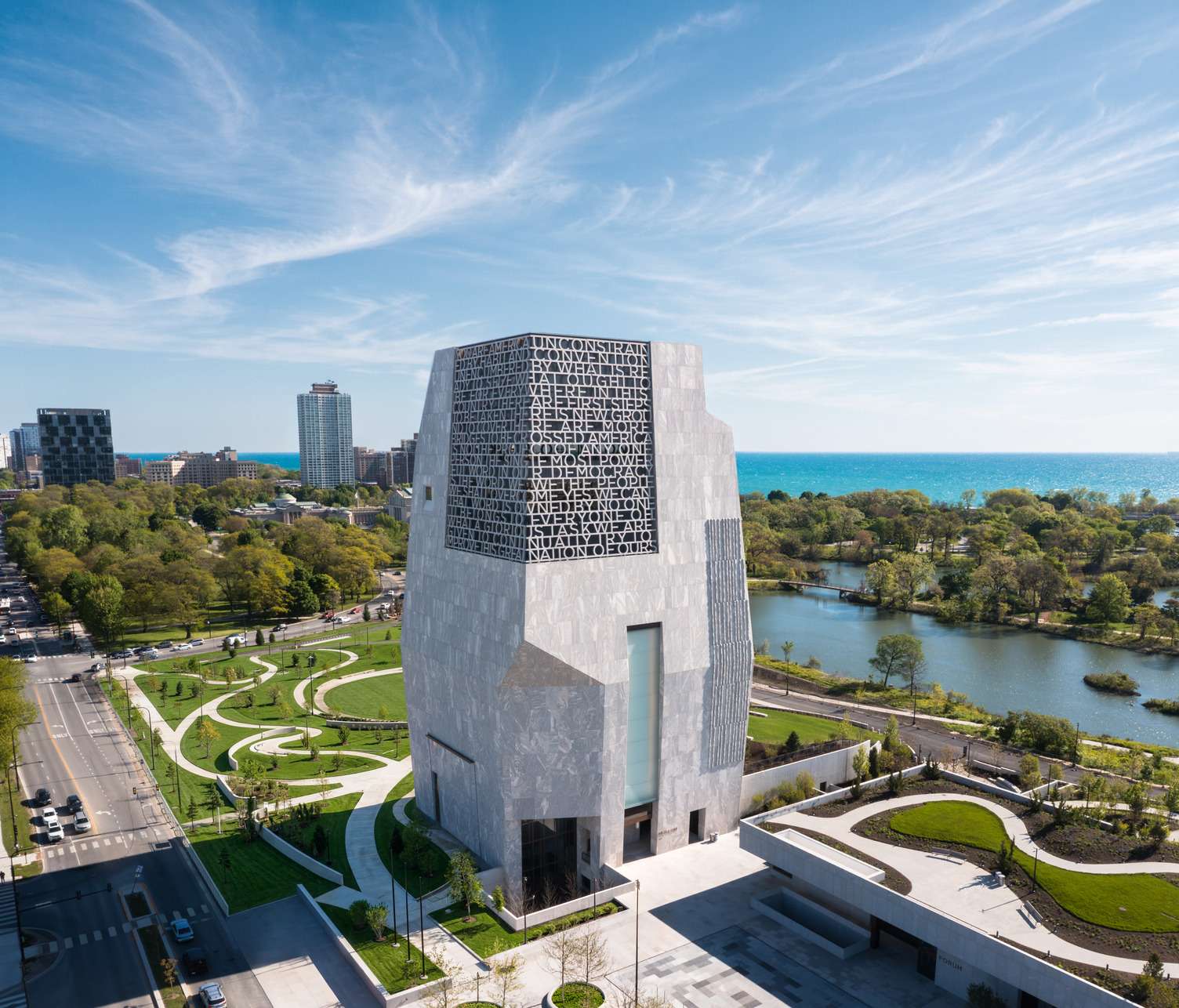
The new Obama Presidential Centre in Chicago has a public library, a youth programme and a digital archive, but no traditional presidential archive building. Its model holds pointed lessons for African governments still measuring education in bricks and mortar.
When Barack Obama's presidential centre opened its doors on Chicago's South Side on 19 June, visitors expecting the usual temple of paper records found something rather different. The $800 million campus in Jackson Park, first announced in 2015 and once due to open in 2021, contains a museum, gardens, a sports court and a branch of the Chicago Public Library. What it does not contain is the presidential archive itself.
That sits online. The Barack Obama Presidential Library, run by the US National Archives rather than the Obama Foundation, is the first fully digital presidential library. An estimated 95 per cent of the administration's records were born digital, from emails and photographs to tweets, and the remaining 30 million or so paper pages are being scanned.
It would be easy to dismiss all this as an American indulgence with little bearing on a continent where many schools lack desks, let alone broadband. That would be a mistake. Strip away the architecture and the budget, and the Obama model rests on a handful of ideas that African education badly needs: that knowledge should be open rather than locked away, that a library is a place to learn rather than a place to store, and that an institution must be built to outlive the person who founded it.
A library is not a warehouse
For generations, the African school library has been treated as a storeroom: a locked room of donated textbooks, often out of date, visited mainly at examination time. The Chicago branch inside the Obama centre was conceived as the opposite. It serves the surrounding neighbourhood rather than visiting scholars, residents need not buy a museum ticket to use it, and archivists from the National Archives now hold sessions there to help the public navigate the digital collection.
The lesson for Africa is not to build grand reading rooms. It is to treat the library as an active learning centre, offering e-books, online journals, recorded lessons, research databases and, above all, someone trained to help students use them. In rural communities, where specialist teachers and up-to-date books are scarce, a modest, well-run digital library could open doors that would otherwise stay shut.
There is, however, a familiar trap. Computers without reliable electricity, connectivity without affordable data, and equipment without technicians quickly become expensive ornaments. A digital library is only as good as the power supply, the bandwidth and the staff behind it.
Guarding Africa's memory
The Obama archive exists so that historians, journalists and ordinary citizens can scrutinise how a government worked. Africa's own records enjoy no such care. Documents on independence movements, traditional institutions, land, science and education lie scattered across ministry basements, private collections and damp storerooms, where heat, termites and neglect claim them year by year. Too often, African students must consult archives in London, Paris or Lisbon to study their own past.
The effort to protect the Timbuktu manuscripts shows both the stakes and the possibility. Universities, national archives, museums and libraries should pool resources to build national and regional digital repositories, scanning documents, photographs and recorded oral histories before they are lost.
Schools have a part to play. Pupils asked to research and record the history of their own towns, elders and local innovators learn research, interviewing and digital skills while discovering that history is something that happened where they live. The same repositories could document the continent's scientists, engineers, writers and educators, giving young Africans role models whose careers they can actually trace, and mentors they might one day contact.
Beyond the examination hall
The centre's Teen Action Lab, run with the Chicago charity After School Matters, gives local teenagers aged 14 to 18 paid, hands-on programmes in sport and wellbeing, with arts, media, gardening, cooking and trades to follow. The emphasis is on doing, not reciting.
That is precisely where many African systems fall short. Students study computer science without computers, agricultural science without a farm plot and chemistry without a laboratory. They leave school with certificates but little experience of applying what they know. Examinations matter, but they cannot be the only measure of an education. Science clubs, coding groups, debating societies, enterprise projects and supervised community service build the problem-solving, teamwork and initiative employers say they cannot find.
The rise of artificial intelligence makes this more urgent, not less. Well-designed digital platforms can deliver lessons, practice questions and feedback tailored to each learner, and help teachers spot pupils who are falling behind. But technology should support good teaching, not replace it. Every investment should start with a clear question: how will this improve learning, and how will we know?
The question is sharpest outside the cities. Urban schools tend to attract the qualified teachers, laboratories and libraries, while rural ones make do. The Chicago branch was deliberately placed in a neighbourhood that needed it. African equivalents need not be grand: solar-powered computer rooms, mobile libraries and offline learning servers can bring resources to villages beyond the reach of the grid. A community ICT centre could teach children by day and offer digital literacy and vocational courses to adults by evening, so that no facility sits idle.
Built to outlast its founder
Perhaps the most transferable lesson is institutional. The Obama centre does not depend on one man's continued enthusiasm. It is held up by a foundation with defined responsibilities and by partnerships with established bodies: the National Archives runs the records, the Chicago Public Library runs the branch, and After School Matters runs the youth programmes. The Obama Foundation has also put more than $4.5 million towards digitising the remaining paper records.
Africa is littered with the opposite: the computer laboratory opened with fanfare by a governor and abandoned when his term ended; the library donated by a philanthropist that closes when the cheques stop. A facility without a budget for electricity, security, software, repairs and staff is a gift with an expiry date.
Governments will remain the main providers of education, but they cannot carry the load alone. Alumni associations, businesses, professional bodies, charities and individuals all have a part. So do the millions of Africans working abroad as engineers, doctors, academics and entrepreneurs, many of whom could lecture, supervise projects or mentor students over a video call at little cost.
Goodwill, however, needs direction. A school short of science teachers gains more from teacher training than from a new block; a school with idle computers needs power and internet, not more machines. Contributions should follow a shared plan built on real needs, with transparent accounts that donors can follow, ideally online.
A caution from the South Side
The Obama project is not beyond criticism, and its controversies are instructive too. Community organisers warned that it could drive up rents and push out long-standing residents, while preservationists went to court over the use of historic parkland. Whether the centre ultimately benefits its neighbours, as Mr Obama insists it will, remains to be seen.
African planners should take note. An educational project is worth only as much as the use made of it by the people it was meant to serve. Parents, teachers, pupils and residents should be consulted before the foundations are dug, and fees should never quietly shut out the poorest.
Counting what matters
Above all, Africa must stop measuring educational progress by ribbon-cuttings. A library does not raise literacy simply by existing; computers do not create digital skills; a laboratory does not produce scientists. A library should be judged by who uses it and what they learn, an ICT centre by how many people gain skills they can apply, a scholarship scheme by how many recipients complete their studies, and a vocational centre by how many graduates find work or start businesses.
None of this requires Chicago's budget or its architecture. It requires clear goals, honest evaluation and institutions governed well enough to survive changes of leadership. National digital archives, regional resource centres and modest community learning hubs, linked across borders to share research and expertise, would be a start.
The true measure of Africa's educational progress will not be the number of buildings opened, but the knowledge gained, the skills acquired and the lives changed inside them. If the Obama centre teaches anything, it is that the institutions worth building are those that keep serving long after their founders have left the stage.
Related in Education
Keeping girls in the classroom: the Wellbeing Foundation's quiet revolution
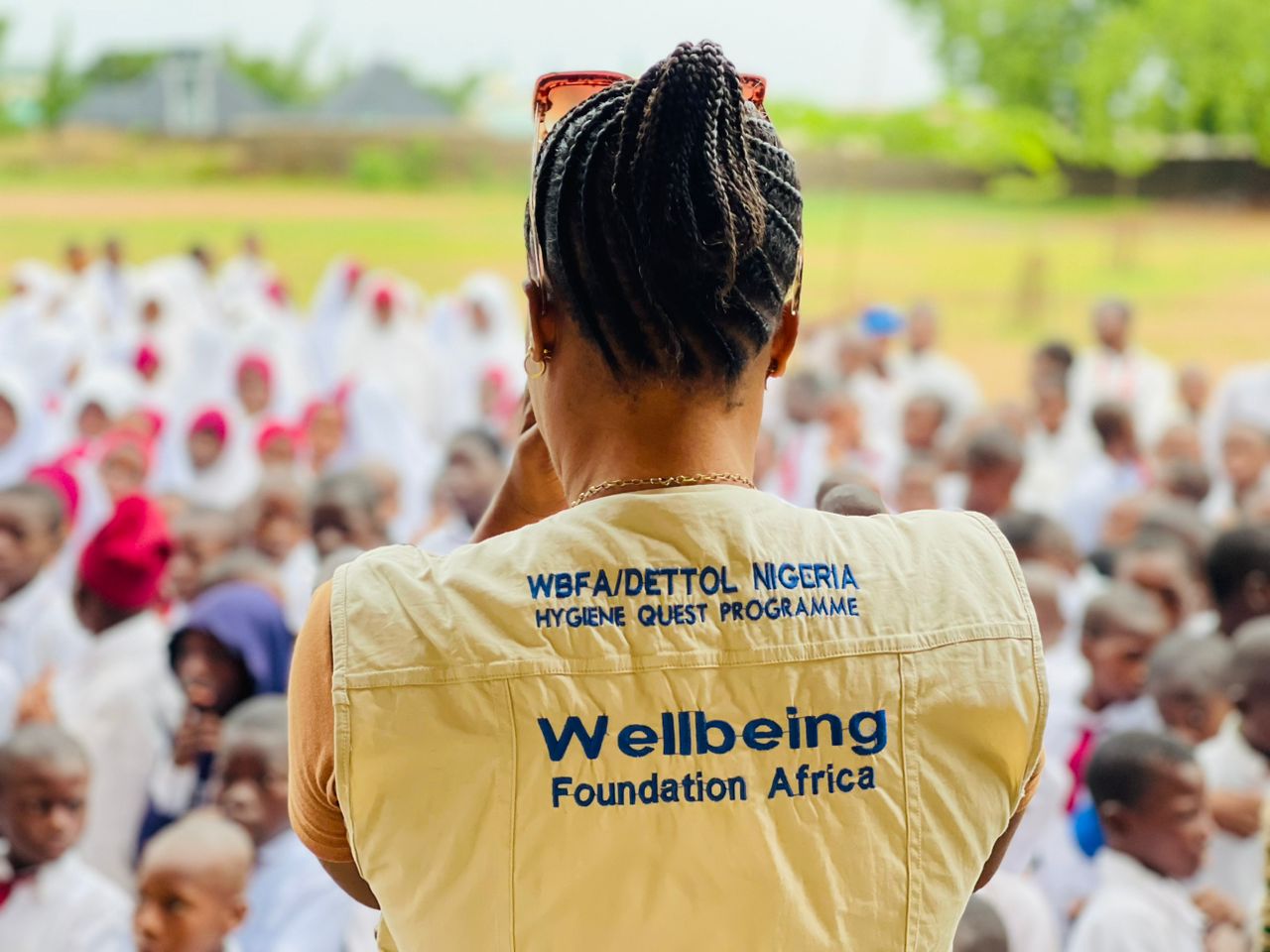
A 2025 study found that more than half of school-age girls in Nigeria miss school each month because sanitary products are unaffordable or unavailable. A girl who misses a week every month will, sooner or later, stop going at all. Founded in 2004 by Toyin Ojora Saraki as a maternal health charity, the Wellbeing Foundation Africa has built its work for girls on that insight. It runs school programmes on menstrual hygiene, nutrition and girls’ rights, and by its own account its Hygiene Quest curriculum has reached 57,900 girls in schools. The aim is that no Nigerian girl should have to choose between her dignity and her desk.

When the moon stopped talking: Africa's lost classroom of values
For generations, African children learnt right from wrong not from textbooks but from a grandmother’s voice under the full moon. Through the greedy tortoise and the cunning spider, they absorbed honesty, respect for elders and loyalty to the community, often without anyone spelling out the moral. Urbanisation, television, smartphones and the retreat of African languages have since silenced that nightly classroom. The moon still rises over every village and city. What is missing is the circle beneath it.
Can a screen fill Africa's empty teacher's desk? 18 Oct 2026 · @Richard Awoseyin
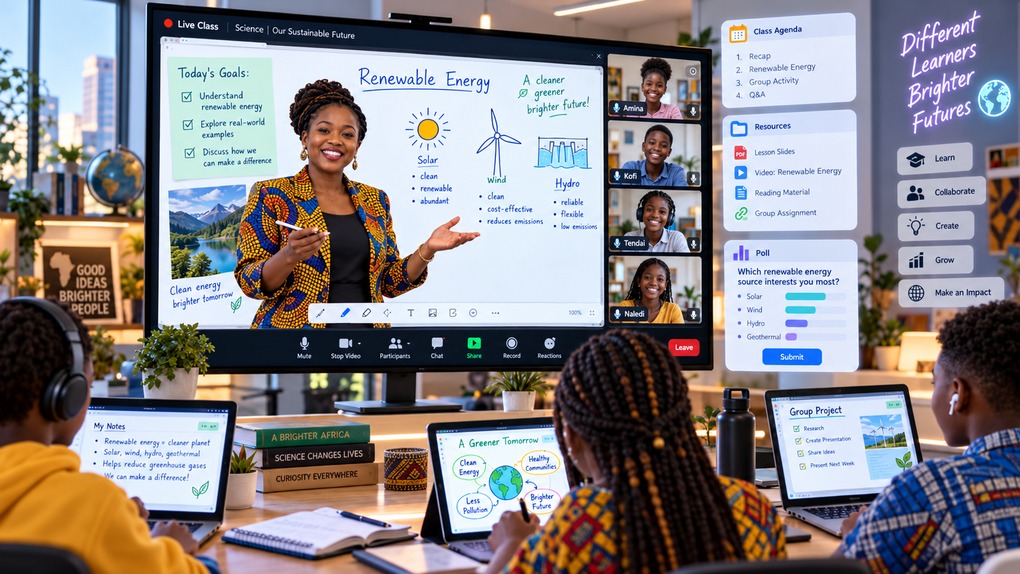
Sub-Saharan Africa needs 15 million more teachers by 2030, more than any other region, and it cannot train them fast enough. But a shortage of teachers is really a shortage of teaching, and teaching can travel. In Ghana, live satellite lessons from a studio in Accra raised rural pupils’ maths scores by about a quarter of a standard deviation. In Botswana, a weekly text message paired with a 20-minute phone call cut innumeracy by 31 per cent. Virtual classrooms will not replace Africa’s missing teachers. Used wisely, they can make every good one go much further.