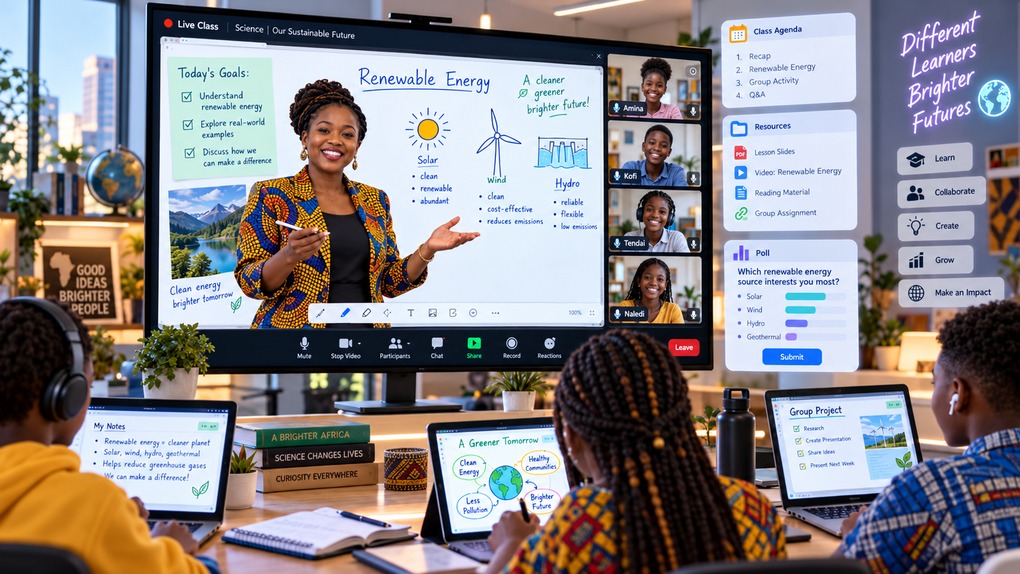
Sub-Saharan Africa needs 15 million more teachers by 2030, and it cannot train them fast enough. Virtual classrooms will not replace the missing teachers, but the evidence suggests they can make every good one go much further.
In a village primary school far from any town, it is not unusual to find one teacher responsible for two or three classes at once, or a secondary school offering no physics because no physics teacher will take the posting. Multiply that across a continent and the scale of the problem comes into focus.
UNESCO's Global Report on Teachers estimates that the world needs 44 million additional primary and secondary teachers by 2030. Sub-Saharan Africa alone accounts for 15 million of them, the largest regional shortfall on earth. Unlike in most of the world, the gap there has barely narrowed since 2016, because a fast-growing school-age population keeps raising the target. More than twice as many are needed at secondary level, 10.7 million, as at primary, 4.4 million, according to UNESCO data.
No government can recruit, train and pay that many people in four years. The question is therefore not whether Africa should look for ways to stretch its existing teachers, but how. Increasingly, the answer on offer is the virtual classroom.
One teacher, many classrooms
The principle is simple. A shortage of teachers is really a shortage of teaching, and teaching can travel. A skilled mathematics teacher in a city studio can deliver a live lesson to dozens of rural classrooms at once, answering questions through a microphone link, while a local facilitator keeps order, hands out worksheets and helps pupils who fall behind.
The technology comes in several forms, each suited to a different budget. At the top end are interactive satellite or broadband classrooms, with a screen, camera and solar panel in each school. In the middle are recorded video lessons stored on cheap offline servers or tablets, which need no internet connection once loaded. At the bottom, and often the most practical, are radio, television and the humble mobile phone, which reach households that will never see a laptop.
Virtual classrooms can also attack the problem from the other end, by training the teachers Africa already has. Many serving teachers lack formal qualifications, and sending them to college for a year empties classrooms further. Remote training lets them upgrade their skills without leaving their pupils.
The appeal for hard-pressed ministries is obvious: the scarcest resource, an excellent subject specialist, is no longer confined to one room.
What the evidence shows
This is not merely theory. Some of the most rigorous evidence for remote teaching anywhere comes from Africa.
In Ghana, the Varkey Foundation's satellite programme equipped 70 rural primary schools with solar power and a link to a studio in Accra, from which trained teachers delivered live, interactive mathematics and English lessons. A randomised trial run with Innovations for Poverty Action compared them with 77 schools that did not receive it. Maths scores rose by about a quarter of a standard deviation, a substantial gain by the standards of education research, with significant improvements in foundational literacy too.
Tellingly, the researchers found the gains did not come from pupils attending more or spending longer on task. They appear to have come from better teaching, and from the local facilitators, who were actively helping pupils for more than half the time lessons were on screen. In effect, the classroom gained a second adult.
In Botswana, the charity Youth Impact went further down the technology ladder. When schools closed during the pandemic, it tutored primary pupils with a weekly text message of maths problems and a 20-minute phone call. A randomised trial found that among children receiving both, innumeracy fell by 31 per cent. The approach, since tested in six countries including Kenya and Uganda, improved learning in all of them, and government teachers proved as effective as NGO tutors. Crucially, text messages alone did not work: it was the live, human contact that made the difference.
Ghana has also used satellite links to train the trainers. One programme broadcast interactive sessions to about 800 headteachers at 40 hub schools, who then passed the training on, reaching some 5,000 teachers in 519 schools.
The lesson from all three is consistent. Technology works when it carries good teaching and keeps a human being in the loop. It fails when it is a screen left to babysit a room.
The obstacles
The enthusiasm needs tempering. The schools that most need a remote teacher are often the least able to receive one.
Power comes first. The International Energy Agency estimates that about 600 million Africans still live without electricity, and in parts of sub-Saharan Africa population growth is outpacing new connections. A virtual classroom without solar panels and batteries is a dark room with an expensive screen in it.
Connectivity is the second hurdle. The International Telecommunication Union reports that only 36 per cent of Africans were online in 2025, the lowest of any region, falling to 21 per cent in rural areas. Mobile data remains expensive relative to incomes. Live video lessons beamed to every village are, for now, a distant prospect.
Then there is the pandemic's warning. When schools closed in 2020, many African governments rushed out radio, television and online lessons, yet much learning was still lost. Broadcasting content is not the same as teaching it. Children need feedback, encouragement and someone who notices when they are lost.
Finally, there is a political temptation. A ministry facing a teacher shortage might see screens as a cheaper substitute for salaries. That would be a grave mistake. Every successful programme above relied on trained adults in the room or on the line. Virtual classrooms can multiply good teachers; they cannot conjure them from nothing.
Making it work
If African governments want virtual classrooms to ease the teacher deficit rather than paper over it, a few principles follow from the evidence.
They should start with the subjects and places where the gap is widest: secondary-school mathematics, science and English in rural districts, where a single studio teacher can serve many schools that would otherwise go without. They should match the technology to the setting, using offline servers, radio and phones where connectivity is poor, and saving live video for schools with reliable power and bandwidth. Solar power should be part of every package, not an afterthought.
They should invest in people as much as hardware. Local facilitators need training and pay, and studio teachers need to be among the best in the country. The same networks should be used to train and upgrade serving teachers, so that the technology strengthens the profession rather than replacing it.
And they should measure results. Ghana and Botswana show that rigorous trials are possible on African soil. Programmes should be judged on what children learn, not on how many screens are installed or how many hours of content are broadcast.
A multiplier, not a substitute
Africa's teacher shortage will not be solved by technology alone. It will take better pay, faster training and more attractive careers to recruit the millions of teachers the continent needs.
But in the meantime, a generation of children cannot wait. Used wisely, the virtual classroom offers something valuable: a way to put Africa's best teachers in front of far more pupils than one room can hold, and to bring a skilled voice into schools that have none. It is not the answer to the teacher deficit. It may well be the bridge that carries a generation across it.
Related in Education
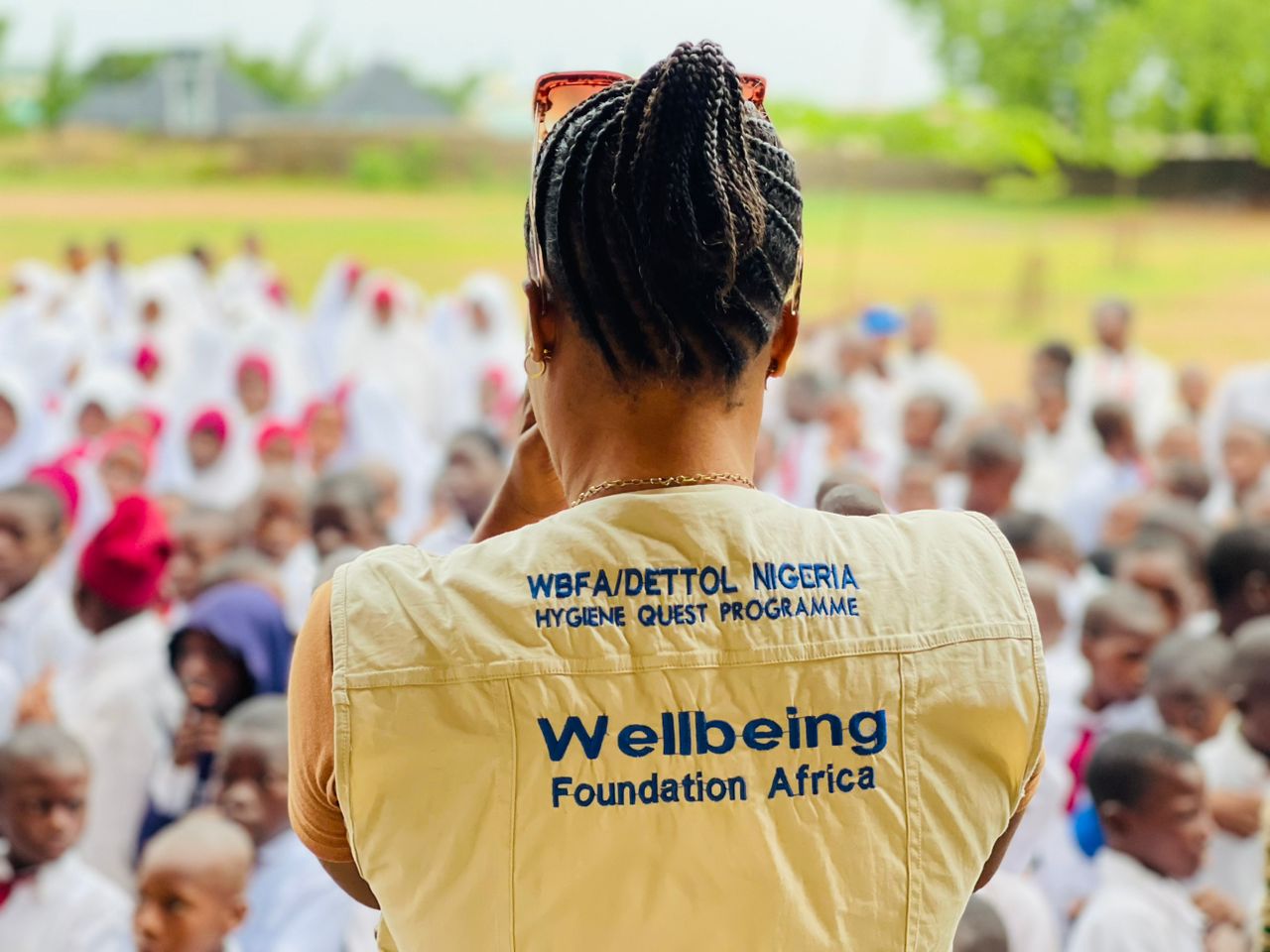
Keeping girls in the classroom: the Wellbeing Foundation's quiet revolution
A 2025 study found that more than half of school-age girls in Nigeria miss school each month because sanitary products are unaffordable or unavailable. A girl who misses a week every month will, sooner or later, stop going at all. Founded in 2004 by Toyin Ojora Saraki as a maternal health charity, the Wellbeing Foundation Africa has built its work for girls on that insight. It runs school programmes on menstrual hygiene, nutrition and girls’ rights, and by its own account its Hygiene Quest curriculum has reached 57,900 girls in schools. The aim is that no Nigerian girl should have to choose between her dignity and her desk.

When the moon stopped talking: Africa's lost classroom of values
For generations, African children learnt right from wrong not from textbooks but from a grandmother’s voice under the full moon. Through the greedy tortoise and the cunning spider, they absorbed honesty, respect for elders and loyalty to the community, often without anyone spelling out the moral. Urbanisation, television, smartphones and the retreat of African languages have since silenced that nightly classroom. The moon still rises over every village and city. What is missing is the circle beneath it.
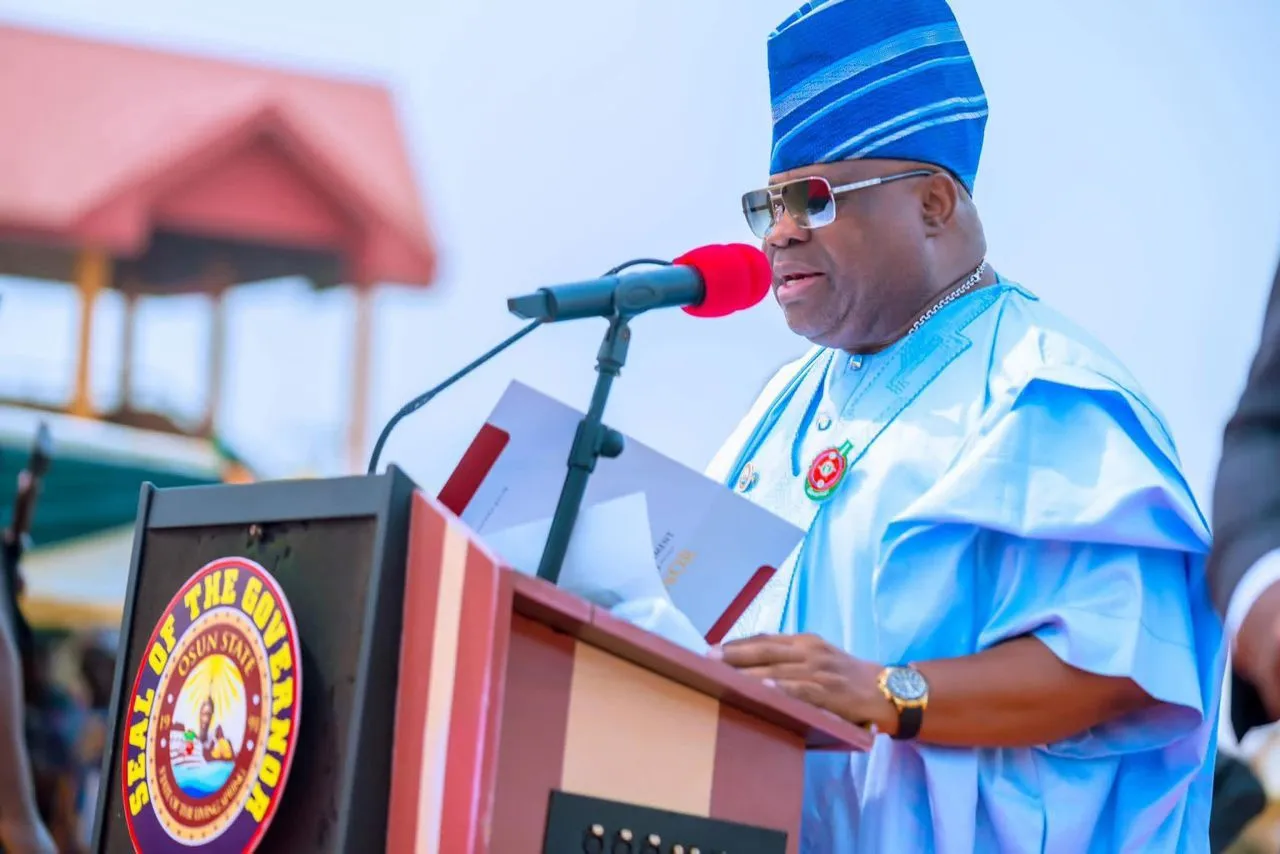
Osun's classroom revival: how Adeleke is rebuilding the state's schools
Four years ago Osun languished near the bottom of Nigeria’s examination tables. In the National Examinations Council’s ranking of states for the 2024 Senior School Certificate Examination, it climbed from 33rd to seventh. The state government called that its best showing in 18 years, and the pass rate rose again to 72.64 per cent in 2025. Freshly re-elected in August, Governor Ademola Adeleke has rebuilt classrooms, restored bursaries and begun hiring teachers. He now has four more years to make good on his boldest promise: taking Osun from seventh to first.