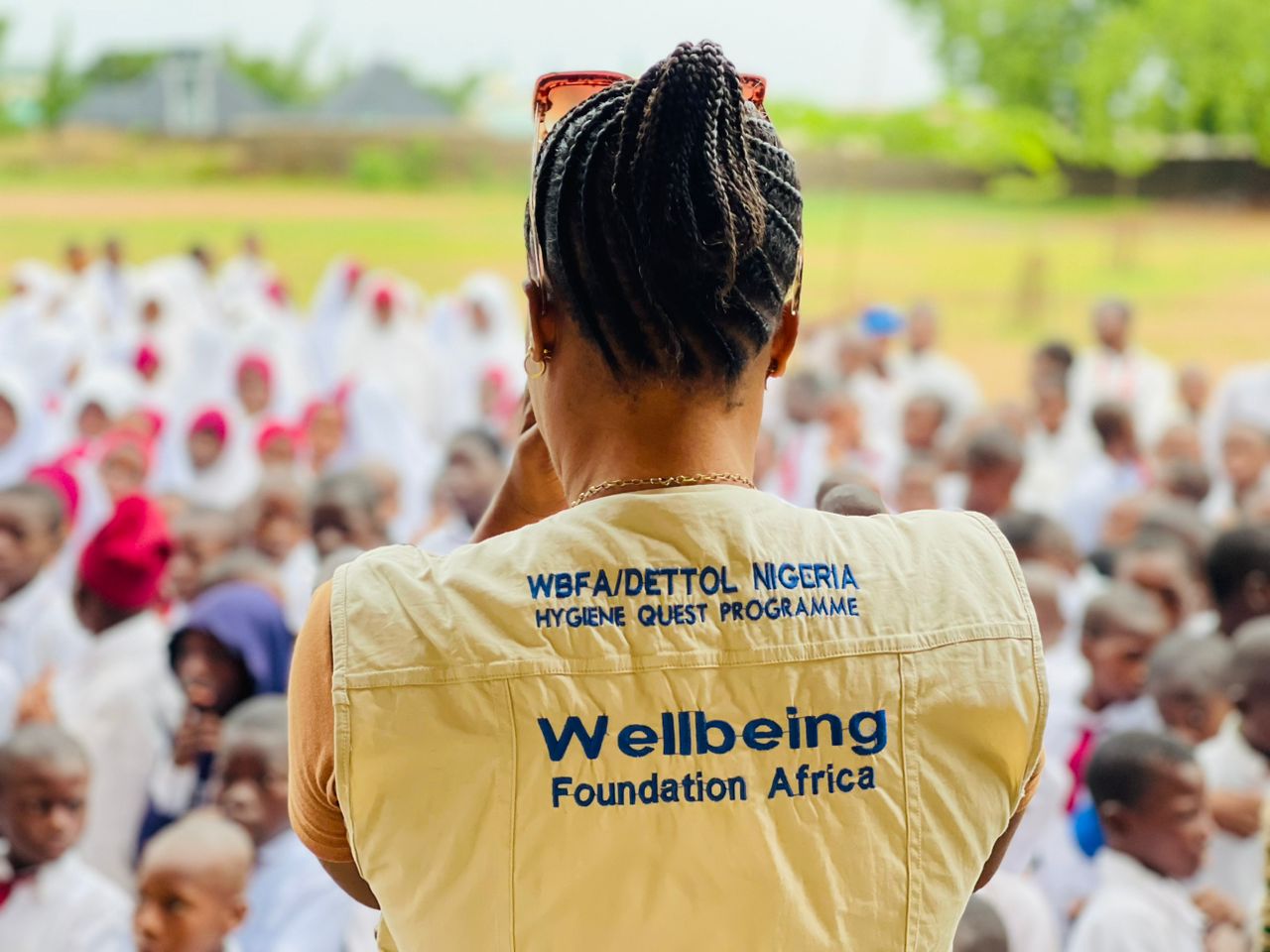
A girl who misses a week of school every month will, sooner or later, stop going at all. The Wellbeing Foundation Africa has built its work for girls on that simple insight: you cannot keep a girl in the classroom if you ignore her health.
It is a quiet kind of exclusion. No one bars her from the school gate. But each month, without sanitary products, without a clean toilet and without anyone who will explain what is happening to her body, a Nigerian schoolgirl stays at home. A 2025 study in Frontiers in Reproductive Health found that more than half of school-age girls in Nigeria miss school each month because sanitary products are unaffordable or unavailable. The lessons pile up, the examinations loom, and too many simply give up.
The Wellbeing Foundation Africa, founded in 2004 by Toyin Ojora Saraki, a former first lady of Kwara State, began life as a maternal and newborn health charity. Its best-known work has been training midwives and fighting preventable deaths in childbirth. Over two decades, however, it has become one of Nigeria's most persistent champions of a cause that might seem, at first glance, quite different: keeping girls in school.
The connection, its founder insists, is not accidental. The healthy, educated girl of today is the safe mother of tomorrow, and the foundation's work for girls is built on the conviction that health and schooling are two halves of the same promise.
Why health and schooling are one cause
Development economists have long argued that educating girls is among the best investments a society can make. Girls who stay in school tend to marry later, have healthier children and earn more. UNICEF speaks of a multiplier effect that ripples across generations.
The Wellbeing Foundation's contribution has been to look closely at what pushes girls out in the first place, and to find that many of the causes are matters of health and hygiene rather than tuition fees. In parts of sub-Saharan Africa, the foundation notes, girls without proper water, sanitation and hygiene facilities can miss up to five days of school a month, or drop out entirely.
Add to that early pregnancy, poor nutrition and silence around puberty, and the picture becomes clear. A scholarship alone cannot keep a girl in school if she has no sanitary pad, no safe toilet and no trusted adult to talk to. Solve those problems, and the classroom door stays open.
Safe spaces, skills and hygiene
The heart of the foundation's work with girls is its Adolescent Skills and Drills programme, a personal, social and health education course delivered in schools by trained Wellbeing youth counsellors. Built around the foundation's own handbook, it covers menstrual hygiene, nutrition, respectful relationships and girls' rights, drawing on the international Girl Declaration. The aim, in the founder's words, is to create safe spaces where girls can share their challenges and find support.
The programme has grown steadily from its early days. In 2017 it expanded to schools in Abuja. On the International Day of the Girl Child in 2018, the foundation took the curriculum to more than 500 girls in four schools across Lagos, Kwara and Abuja, adding lessons in money management and practical skills so that girls would leave not only healthier but more financially independent.
Its largest reach has come through hygiene education. Working with Dettol, the foundation co-developed the Hygiene Quest curriculum for Nigerian schools. By the founder's account on the 2024 International Day of the Girl Child, the programme's second phase had reached 57,900 girls in schools and 3,393 in communities, as part of a wider push to reach more than 248,000 children across 620 schools.
The foundation has also looked beyond survival to opportunity. In 2021 it launched a Digital Village in Lagos to teach girls digital and STEM skills under the theme "Digital Generation, Our Generation". And because the people who teach girls about their bodies matter as much as the curriculum, its long-running investment in training midwives and health workers gives communities trusted, knowledgeable women to turn to.
Saraki puts the philosophy simply: "Girls are the beating heart of our future, and the leaders of today."
The scale of the task
For all its energy, the foundation is working against enormous odds. UNICEF estimated last November that Nigeria had 10.2 million out-of-school children, one of the largest numbers of any country, with girls disproportionately represented in the North East and North West. Poverty, early marriage, insecurity and distance from school all play their part, alongside the health barriers the foundation targets.
Against numbers like these, tens of thousands of girls reached is a meaningful contribution but not a solution, and the foundation does not pretend otherwise. Much of the evidence for its programmes comes from its own reporting rather than independent evaluation, and the true test, whether more girls stay in school and finish, is harder to measure than how many attended a session.
What the foundation has shown is a model that others can copy: work through schools, train local counsellors and health workers, partner with companies that make hygiene products, and treat a girl's body and her education as one concern rather than two.
A cause worth scaling
The foundation's founder once said she hoped its girls' programme would one day reach every school in Nigeria. That ambition is well beyond any single charity. It is not beyond the reach of government.
State ministries of education could fold menstrual health and life-skills teaching into the curriculum, guarantee clean water and private toilets in every school, and provide free or subsidised sanitary products, as several countries now do. Companies that profit from Nigeria's young consumers could follow the example of partners such as Dettol and Reckitt. And independent researchers could rigorously test which parts of programmes like the Wellbeing Foundation's do most to keep girls enrolled, so that money follows results.
For two decades, the Wellbeing Foundation Africa has argued that a girl's health and her education rise or fall together. It has made that case in classrooms from Ilorin to Abuja, one handbook, one counselling session and one hygiene lesson at a time. The challenge now is to turn a charity's quiet revolution into national policy, so that no Nigerian girl ever again has to choose between her dignity and her desk.
Related in Education
When the moon stopped talking: Africa's lost classroom of values
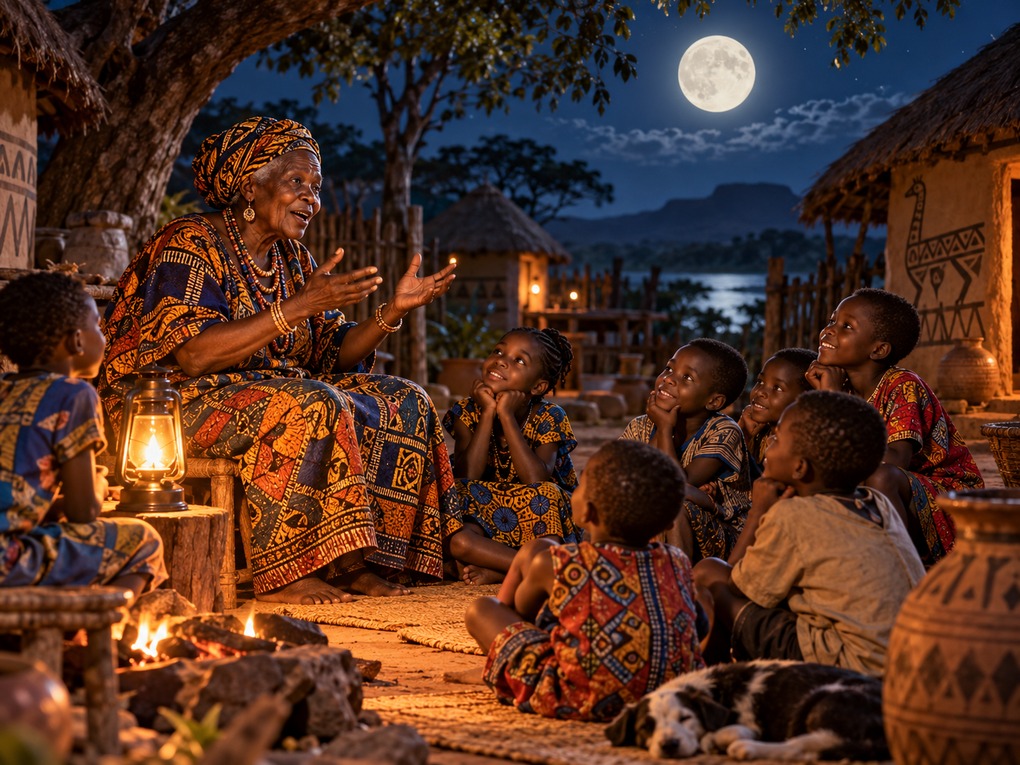
For generations, African children learnt right from wrong not from textbooks but from a grandmother’s voice under the full moon. Through the greedy tortoise and the cunning spider, they absorbed honesty, respect for elders and loyalty to the community, often without anyone spelling out the moral. Urbanisation, television, smartphones and the retreat of African languages have since silenced that nightly classroom. The moon still rises over every village and city. What is missing is the circle beneath it.
Can a screen fill Africa's empty teacher's desk? 18 Oct 2026 · @Richard Awoseyin
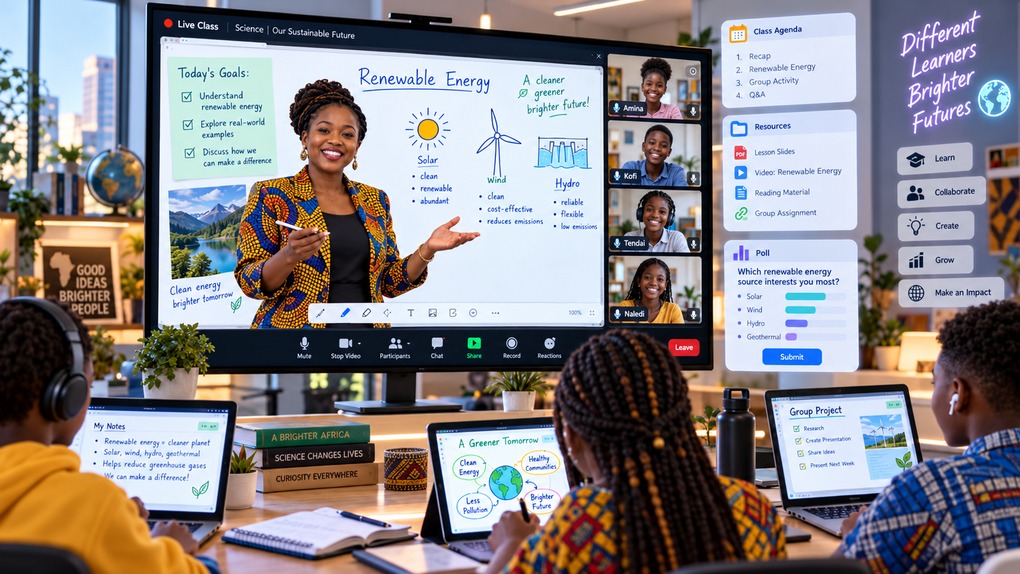
Sub-Saharan Africa needs 15 million more teachers by 2030, more than any other region, and it cannot train them fast enough. But a shortage of teachers is really a shortage of teaching, and teaching can travel. In Ghana, live satellite lessons from a studio in Accra raised rural pupils’ maths scores by about a quarter of a standard deviation. In Botswana, a weekly text message paired with a 20-minute phone call cut innumeracy by 31 per cent. Virtual classrooms will not replace Africa’s missing teachers. Used wisely, they can make every good one go much further.

Osun's classroom revival: how Adeleke is rebuilding the state's schools
Four years ago Osun languished near the bottom of Nigeria’s examination tables. In the National Examinations Council’s ranking of states for the 2024 Senior School Certificate Examination, it climbed from 33rd to seventh. The state government called that its best showing in 18 years, and the pass rate rose again to 72.64 per cent in 2025. Freshly re-elected in August, Governor Ademola Adeleke has rebuilt classrooms, restored bursaries and begun hiring teachers. He now has four more years to make good on his boldest promise: taking Osun from seventh to first.