
For generations, African children learnt right from wrong not from textbooks but from a grandmother's voice under the full moon. As television, smartphones and foreign languages have taken her place, a continent is discovering what it lost when the stories stopped.
The evenings once followed a familiar rhythm. Supper eaten, the lamps were dimmed and the children of the compound gathered in the open courtyard, where the moon gave all the light anyone needed. An elder, more often than not a grandmother, would clear her throat and begin.
Among the Yoruba the opening was a call, Àló o!, and the children would chorus back their reply. The Igbo called such stories akuko ifo; in Ghana they were the tales of Kwaku Ananse, the cunning spider. The names differed from Dakar to Durban, but the ritual was remarkably alike: a story, a song in which everyone joined, a gasp at the trickster's comeuppance and, at the end, a lesson that no child would forget.
Those moonlit circles were entertainment, certainly. But they were also something more: a nightly classroom in which a society passed on its values, its humour and its sense of who it was. Across much of Africa today, that classroom has fallen silent.
The tortoise, the spider and the lesson
The stars of these stories were rarely kings or warriors. They were animals with human failings, and the greatest of them was a trickster. To the Yoruba he was Ijapa the tortoise; to the Igbo, Mbe; to the Akan, Ananse the spider; to others, the hare who would cross the Atlantic and become Br'er Rabbit.
The trickster was clever, charming and endlessly greedy, and that was the point. Children laughed at his schemes and then watched him pay for them. In the best-known Igbo version, retold by Chinua Achebe in Things Fall Apart, Tortoise persuades the birds to lend him feathers so he can fly to a feast in the sky, tricks them out of their share of the food, and is left to fall to earth when they take their feathers back. His shell, the story explains, is still cracked from the landing.
No one needed to spell out the moral. Greed is punished; deceit catches up with the deceiver; the community remembers who cheated it. That subtlety was the genius of the form. A lecture invites resistance; a story slips past it.
The telling itself was a lesson in participation. Children sang the refrains, answered the storyteller's questions and, as they grew older, took their own turn in the circle. They learnt to listen, to speak in front of others and to hold an audience, skills no examination tests but every community needs.
A curriculum of character
Read together, the moonlight tales amount to a moral curriculum, one that pre-dated mission schools by centuries.
They taught honesty, by showing liars exposed. They taught respect for elders, as the impatient youth who ignored his grandmother's warning met his ruin in the forest. They taught generosity and hospitality, as the stranger turned away at the door was revealed to be a spirit or a king. They taught patience, humility and hard work, as the lazy farmer starved while his diligent neighbour feasted. Above all, they taught that the individual belongs to a community, and that whoever betrays it, like the tortoise at the sky feast, will one day need its help and find none.
The tales also carried knowledge. They explained why the vulture is bald and why the tortoise's shell is cracked. They preserved place names, family histories, proverbs and the music of the language itself. A child who sat through a season of stories absorbed hundreds of proverbs without ever being made to learn one.
And they built bonds. The storyteller was usually a grandparent, so the tales tied the youngest generation to the oldest. In an extended family compound, they gave children who were not siblings a shared inheritance of jokes, songs and heroes.
Why the fire went out
There was no single moment when the stories stopped. They faded, one compound at a time.
Urbanisation scattered the extended family. Grandparents stayed in the village while their children moved to Lagos, Nairobi or Johannesburg, and the grandchildren grew up in flats where no one gathered in a courtyard. Electricity, so long awaited, brought television, and television brought cartoons from elsewhere. Today the smartphone completes the change: each child absorbed in a separate screen, each evening private rather than shared.
Language has played its part too. The tales lived in African languages, and many urban parents, anxious for their children to succeed in English or French, stopped speaking their mother tongue at home. A story that depends on a pun in Yoruba or a song in Igbo cannot be told to a child who does not understand either.
Policy has wavered. In 2022 Nigeria's government announced that pupils would be taught in their mother tongue for the first six years of primary school. Three years later the education ministry scrapped the policy and reinstated English as the sole classroom language, citing poor results. Whatever the merits of either decision, the reversal shows how little settled agreement there is on the place of African languages in a child's education.
The result is a generation that can name every superhero in a Hollywood franchise but may never have heard of Ijapa or Ananse.
Rekindling the circle
It would be easy to blame every social ill on the loss of the moonlit story, and foolish. Corruption, dishonesty and the breakdown of community have many causes. Nor were the old tales perfect: some reinforced hierarchies of age and gender that modern Africans rightly question.
But it is hard to deny that something valuable has gone. Societies that once taught honesty and communal duty every evening now leave that work largely to schools, churches and mosques, which teach it in very different ways, or to screens, which often teach nothing of the kind.
The good news is that the stories have not vanished; they have merely gone quiet. Nigerians of a certain age still remember Tales by Moonlight, the much-loved television programme that brought folk tales to living rooms in the 1980s and 1990s, proof that the old form can thrive in a new medium. The same is possible today, in animation, podcasts, picture books and short videos told in African languages.
Schools can make room for storytelling in the timetable, inviting elders to tell tales and pupils to retell them. Families can turn off the television one evening a week and let a grandparent, in person or on a video call, take the floor. Writers, illustrators and app developers can treat the continent's vast store of oral literature as a resource as rich as any fantasy franchise.
The moon still rises over every African village and city. What is missing is the circle beneath it. Restore that, and Africa may find that its oldest classroom still has a great deal to teach.
Related in Education
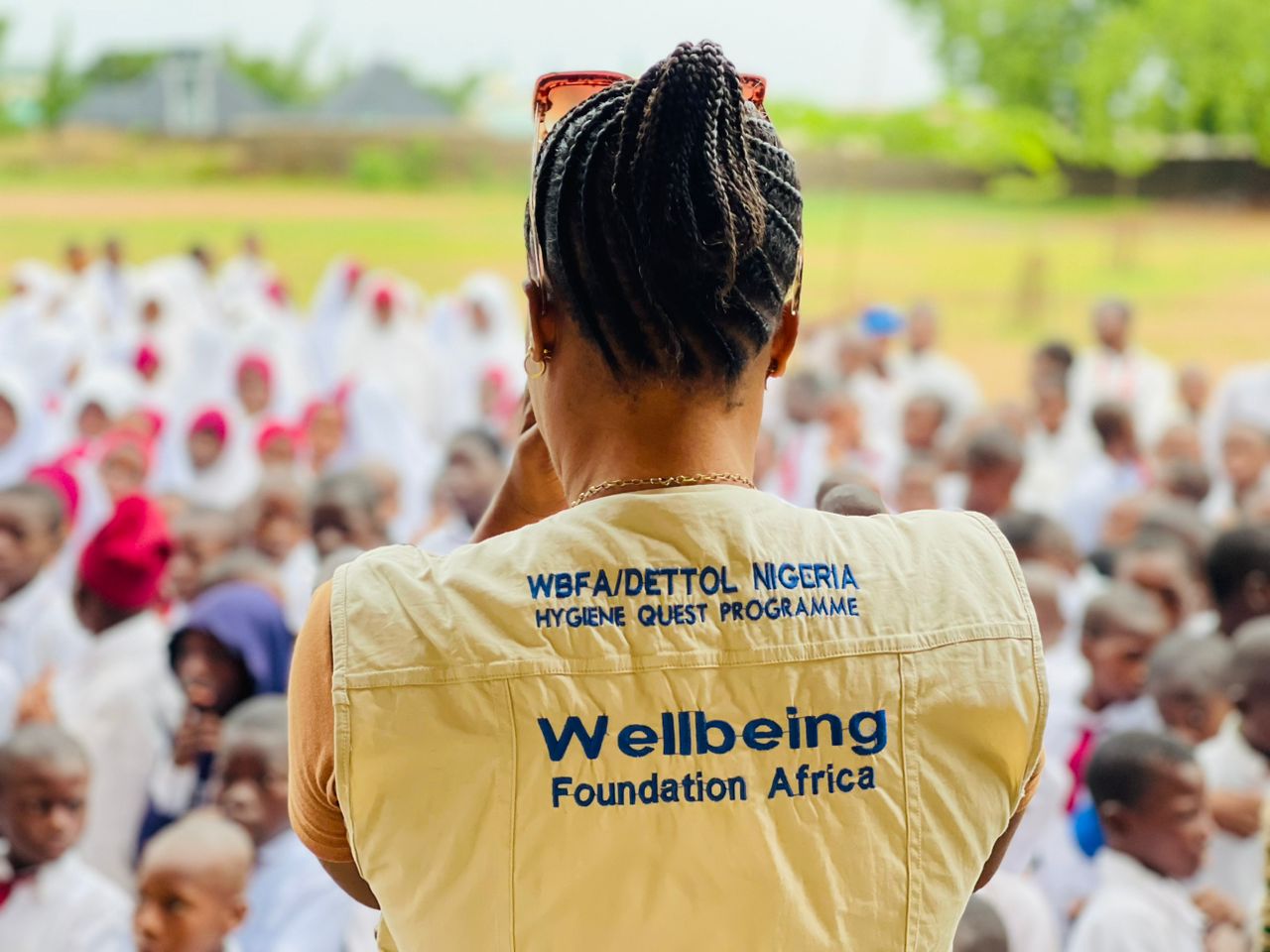
Keeping girls in the classroom: the Wellbeing Foundation's quiet revolution
A 2025 study found that more than half of school-age girls in Nigeria miss school each month because sanitary products are unaffordable or unavailable. A girl who misses a week every month will, sooner or later, stop going at all. Founded in 2004 by Toyin Ojora Saraki as a maternal health charity, the Wellbeing Foundation Africa has built its work for girls on that insight. It runs school programmes on menstrual hygiene, nutrition and girls’ rights, and by its own account its Hygiene Quest curriculum has reached 57,900 girls in schools. The aim is that no Nigerian girl should have to choose between her dignity and her desk.

Can a screen fill Africa's empty teacher's desk? 18 Oct 2026 · @Richard Awoseyin
Sub-Saharan Africa needs 15 million more teachers by 2030, more than any other region, and it cannot train them fast enough. But a shortage of teachers is really a shortage of teaching, and teaching can travel. In Ghana, live satellite lessons from a studio in Accra raised rural pupils’ maths scores by about a quarter of a standard deviation. In Botswana, a weekly text message paired with a 20-minute phone call cut innumeracy by 31 per cent. Virtual classrooms will not replace Africa’s missing teachers. Used wisely, they can make every good one go much further.

Osun's classroom revival: how Adeleke is rebuilding the state's schools
Four years ago Osun languished near the bottom of Nigeria’s examination tables. In the National Examinations Council’s ranking of states for the 2024 Senior School Certificate Examination, it climbed from 33rd to seventh. The state government called that its best showing in 18 years, and the pass rate rose again to 72.64 per cent in 2025. Freshly re-elected in August, Governor Ademola Adeleke has rebuilt classrooms, restored bursaries and begun hiring teachers. He now has four more years to make good on his boldest promise: taking Osun from seventh to first.