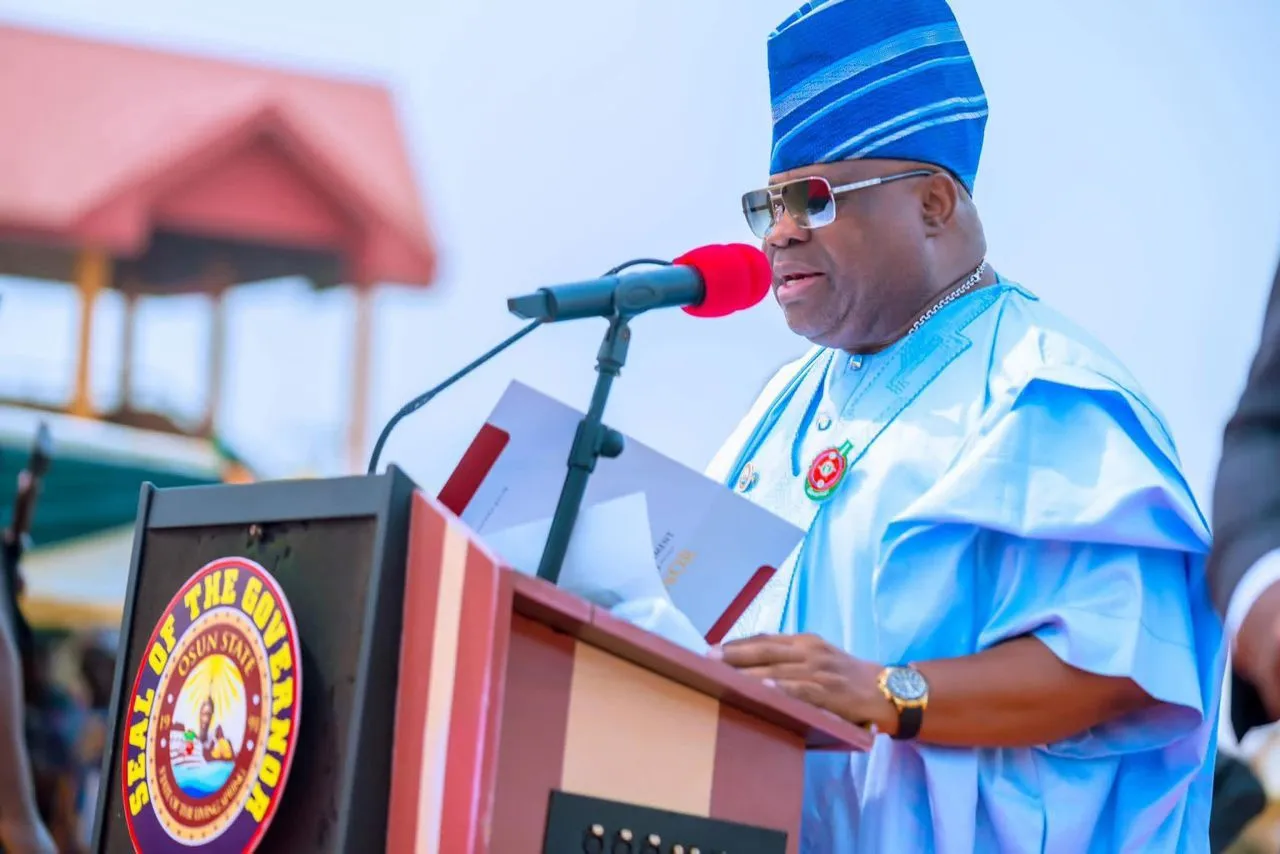
Four years ago Osun languished near the bottom of Nigeria's examination tables. Today it sits in the top ten, and a freshly re-elected governor says first place is next. The classrooms tell a more complicated, but still striking, story.
When Ademola Adeleke campaigned for the Osun governorship in 2022, he made a blunt charge against his predecessors: unpaid salaries and botched school reforms had dragged the state's pupils to the foot of national league tables. He promised to turn it round.
By the time Osun voters returned him to office on 15 August this year, by 511,067 votes to 444,815, education had become one of the strongest planks of his record. The headline figure is hard to ignore. In the National Examinations Council's ranking of states for the 2024 Senior School Certificate Examination, Osun climbed from 33rd to seventh of 37, behind only Lagos, Kano, Oyo, Benue, Ogun and Katsina. The state government called it Osun's best showing in 18 years.
The raw numbers behind the ranking bear it out. Of 41,264 Osun candidates who sat the 2024 NECO examination, 29,101 obtained five credits or more including English and Mathematics, a success rate of about 71 per cent, a figure confirmed by the fact-checking organisation Dubawa. In 2025 the pass rate rose again, to 72.64 per cent.
The governor has called the two-year climb extraordinary, but insists he is not satisfied: "Our target is first place, and it is achievable."
Bricks, benches and solar panels
The most visible change has been to the buildings themselves. In its first year the administration said it had rehabilitated 31 schools. By its own account, between 2022 and 2024 it went on to build or refurbish more than 400 classrooms in 139 schools, supply more than 12,500 sets of furniture, and install ICT equipment and solar power, alongside 1,000 tablets used to monitor attendance.
Less glamorous but arguably as important, it paid Osun's overdue counterpart contributions to the Universal Basic Education Commission stretching back to 2019. Those payments unlock matching federal grants for primary and junior secondary schools, money the state had been leaving on the table.
In March 2025 the government unveiled a N159 billion second-phase infrastructure plan covering roads, health and education, and has since distributed teaching and learning materials to primary and secondary schools across the state.
The battle for teachers
If buildings were the quick win, teachers have been the hard slog. Adeleke's tenure began controversially: a day after his inauguration in November 2022, an executive order voided all public-sector appointments made after the July election, among them about 1,500 teachers hired in the final weeks of the outgoing Oyetola government. The opposition All Progressives Congress called it vindictive; the new administration said the hiring had been rushed through after the vote and ordered an audit of vacancies instead.
That audit fed a needs assessment, and the state executive council later approved the recruitment of 5,000 teachers and 250 education officers. Pleading financial constraints, the government first plugged gaps with 1,750 "Imole Youth Corps" teachers, holders of NCE certificates and degrees deployed on a temporary basis. Permanent hiring followed in batches, with the first batch, including a supplementary list, bringing 1,241 teachers and education officers into the service.
Critics argue it is not enough. Campaigners on the left have dismissed later recruitment as piecemeal against what they describe as a severe shortfall, and the authorities have not said how close it is to the full 5,000. The government counters that it has prioritised teachers' welfare, paying down inherited half-salary and pension arrears in phases and, on this month's World Teachers' Day, reaffirming its commitment to better conditions.
Rewarding the brightest
The administration has also tried to raise ambitions in the classroom. This summer it launched the Imole Senior Secondary School Certificate Examination Scholarship Award, presenting cash prizes to 31 high-achieving students drawn from every local government area at a ceremony at Osun State University.
The gesture is modest in scale, but it signals a shift in tone: from treating public schools as a problem to be managed to treating their best pupils as a source of state pride.
Beyond the school gate
For students in higher education, the most tangible change has been the return of bursaries. Months into office, Adeleke ordered the phased payment of stipends to about 3,500 Osun students in tertiary institutions and nearly 300 law students, with at least 100 beneficiaries drawn from each local government area. For families squeezed by the removal of the fuel subsidy and soaring prices, such payments matter.
The record at the state's flagship, Osun State University, is more contested. The vice-chancellor has publicly thanked the governor for infrastructure support and a palliative for staff after the subsidy removal. The opposition, however, accused the administration in 2023 of releasing only N1.9 billion of a budgeted N5.4 billion in subvention, a charge that captures a wider tension between ambition and money.
The unfinished work
None of this means Osun's schools are fixed. A Premium Times analysis of South-West budgets found that Osun devoted 12 per cent of its 2026 budget to education, well short of the 26 per cent benchmark the paper cited, and spent 73.2 per cent of its 2025 education allocation. In 2023 the education commissioner, Dipo Eluwole, acknowledged that Osun had the highest number of out-of-school children in the South-West.
On the ground, the renovation has been uneven. In June the Osun Defender newspaper reported crumbling buildings, missing toilets and teacher shortages at schools in Ikirun, despite government claims to have renovated more than 200 schools. Examination league tables, moreover, reward many hands: parents, private tutors and a state's long tradition of valuing learning, not governors alone.
A mandate to finish the job
Still, the trajectory is clear. A state that was bumping along near the bottom of national rankings is now competing with Lagos and Oyo. Classrooms have been rebuilt, federal education money unlocked, bursaries restored and new teachers hired, if not yet in the numbers the schools need.
Adeleke now has four more years and a fresh mandate. The test of his second term will be whether he can turn a recovery into a revolution: filling every classroom with a qualified teacher, lifting education's share of the budget, reaching the children still outside the school gate, and making the jump from seventh to first that he has so publicly promised. Osun's parents, having seen the climb begin, will expect nothing less.
Related in Education
Keeping girls in the classroom: the Wellbeing Foundation's quiet revolution
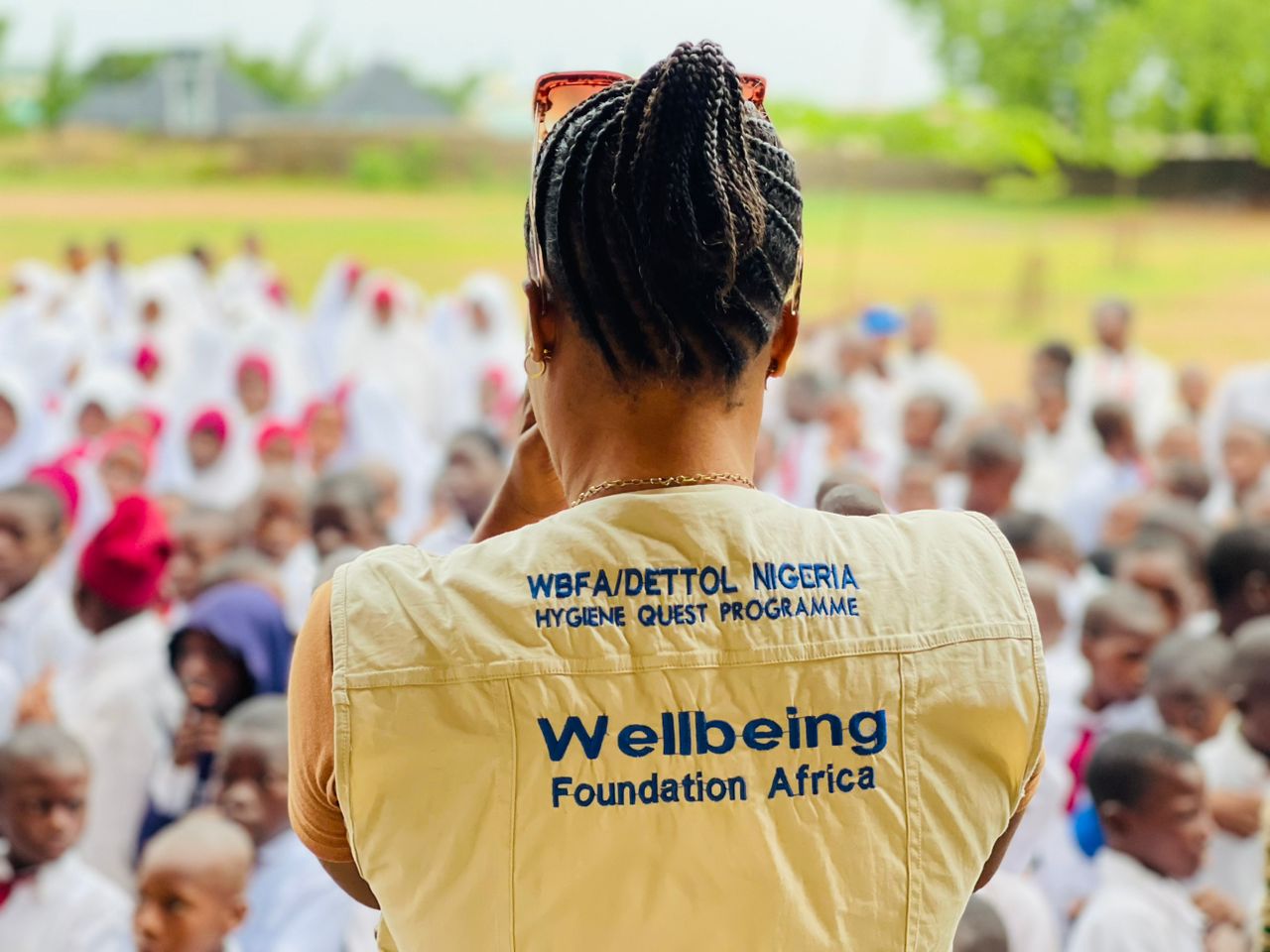
A 2025 study found that more than half of school-age girls in Nigeria miss school each month because sanitary products are unaffordable or unavailable. A girl who misses a week every month will, sooner or later, stop going at all. Founded in 2004 by Toyin Ojora Saraki as a maternal health charity, the Wellbeing Foundation Africa has built its work for girls on that insight. It runs school programmes on menstrual hygiene, nutrition and girls’ rights, and by its own account its Hygiene Quest curriculum has reached 57,900 girls in schools. The aim is that no Nigerian girl should have to choose between her dignity and her desk.

When the moon stopped talking: Africa's lost classroom of values
For generations, African children learnt right from wrong not from textbooks but from a grandmother’s voice under the full moon. Through the greedy tortoise and the cunning spider, they absorbed honesty, respect for elders and loyalty to the community, often without anyone spelling out the moral. Urbanisation, television, smartphones and the retreat of African languages have since silenced that nightly classroom. The moon still rises over every village and city. What is missing is the circle beneath it.

Can a screen fill Africa's empty teacher's desk? 18 Oct 2026 · @Richard Awoseyin
Sub-Saharan Africa needs 15 million more teachers by 2030, more than any other region, and it cannot train them fast enough. But a shortage of teachers is really a shortage of teaching, and teaching can travel. In Ghana, live satellite lessons from a studio in Accra raised rural pupils’ maths scores by about a quarter of a standard deviation. In Botswana, a weekly text message paired with a 20-minute phone call cut innumeracy by 31 per cent. Virtual classrooms will not replace Africa’s missing teachers. Used wisely, they can make every good one go much further.