Ayedun Educational Summit: three years on, a community vision delivers classrooms, computers and scholarships
As Ayedun prepares to host its next Educational Summit, which culminates on Thursday 22 October 2026, a new classroom block, a solar-powered ICT centre and a growing list of sponsored students show what the first gathering set in motion.
When the people of Ayedun, in Oke-Ero Local Government Area of Kwara State, gather this week for the Ayedun Educational Summit (AES), they will have more to discuss than plans. They will have results to count.
In the three years since the inaugural summit in 2023, indigenes, families, alumni and philanthropists have funded classrooms, computer facilities, solar power, a borehole and school fees for children in their ancestral community. Each intervention, large or small, has added to a shared conviction: that the education of Ayedun's children is the community's own responsibility, not the government's alone.
As preparations gather pace, the focus is shifting from mobilisation to consolidation – recognising those who have given, protecting what has been built and deciding what comes next.
The vision behind the summit
The summit was the idea of Mr Fola Adekeye, a journalist and educationist who was formerly an editor at Newswatch magazine and later Director of Studies at Champions International Schools, Magboro, Ogun State.
Adekeye's premise was simple. The people best placed to tackle the challenges facing Ayedun's schools were the community's own successful sons and daughters – professionals, leaders and philanthropists with the resources, experience and goodwill to make a difference. What was missing was a platform to bring them together.
The proposal found ready support and led to the formation of the Ayedun Educational Summit Committee, chaired by Dr Idowu Ogunsola, the Oluomo of Ayedun. Its members include Alhaji Raheem Jimoh, Alhaji Fatai Tiamiyu, Mr Lekan Jimoh and Prince Yemi Adetiba.
The committee settled on a triennial format: every three years, stakeholders would meet to take stock of the schools, agree priorities and mobilise resources.
A landmark first gathering
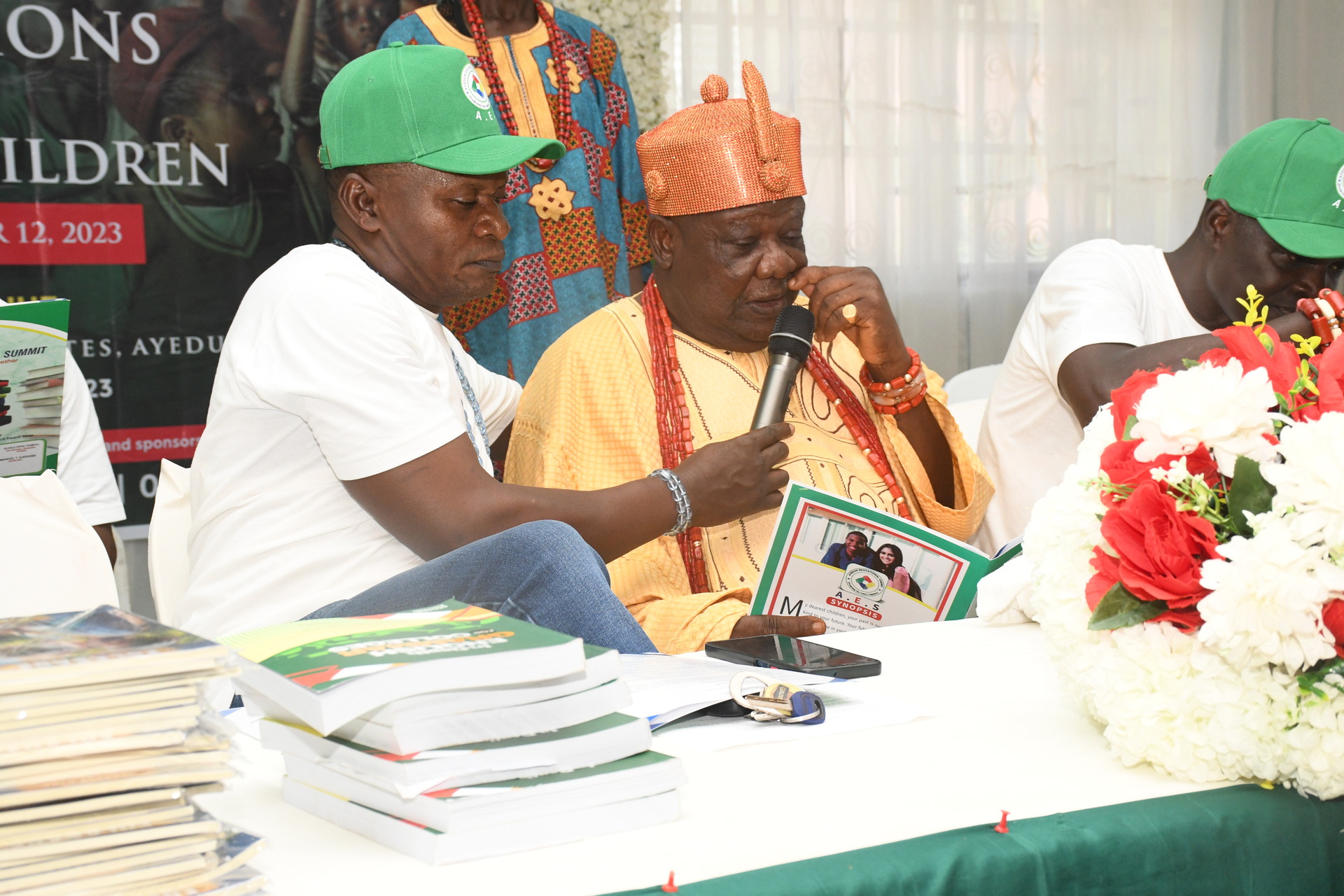
The inaugural summit in 2023 ran for five days and drew traditional rulers, educationists, professionals, alumni, parents, teachers, philanthropists and students. The programme combined academic counselling, mentorship, motivational talks and school visits, with sessions designed to sharpen students' study habits, broaden their career awareness and build their confidence.
It closed with a grand gathering attended by the late Oba Dr Olusegun Abayomi Rotimi, the Obajisun of Ayedun, together with his chiefs, education stakeholders and community representatives. The monarch's patronage lent the summit authority from its first day, and his steadfast support for learning remains an invaluable contribution to the development of education in Ayedun. This year's gathering will be the first without him.
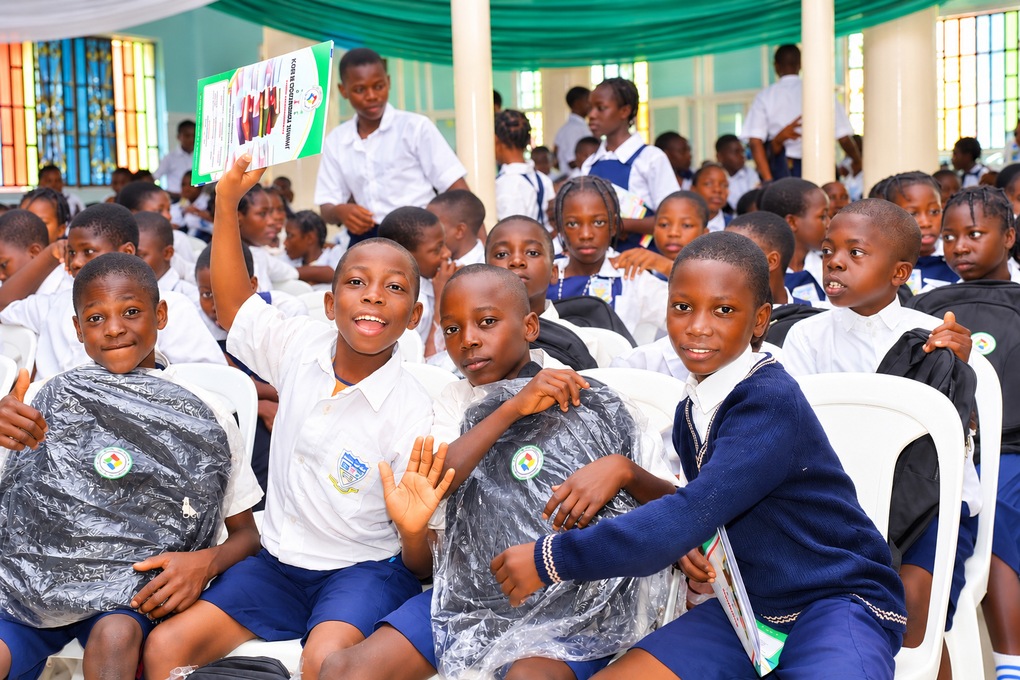
The summit's most immediate achievement was financial. More than 30 individuals pledged contributions worth over ₦4 million, which funded the distribution of 600 school bags, 2,800 exercise books and 3,000 pens to pupils and students at four schools:
Saint Michael Catholic Primary School
Muslim Community Primary School
Ayedun Muslim Community Secondary School
Fatima Community College
Yet the summit's real legacy lay elsewhere. It persuaded individuals and families that they could – and should – take on lasting projects of their own.
Engineer Gabriel Olatoye: classrooms built for the digital age
Among the most substantial projects is a block of three classrooms built by Engineer Gabriel Olatoye. The building gives students a more conducive place to learn, and it is to be fitted with modern ICT equipment so that conventional teaching and technology-based learning can take place under one roof.
The project fulfils a commitment Olatoye made at the inaugural summit, where he also supported school facilities and pledged to do more for the community's infrastructure. It is a clear illustration of how the summit's spirit of participation can be turned into bricks, mortar and equipment that will serve students for decades.
The Tiamiyu family: computers, solar power and school fees
Few families have done more for education in Ayedun than the Tiamiyus, whose support spans both infrastructure and individual students.
A solar-powered ICT centre
Gbenga Tiamiyu, a member of the family, facilitated the construction of an ICT centre at Ayedun Muslim Community College (AMUSCO) through the Federal Government. The centre houses more than 100 computers and runs on solar energy – a vital feature in an area where mains electricity is unreliable.
The facility gives students the chance to build digital literacy and practical computer skills, and to prepare for the computer-based examinations that now stand between them and tertiary admission. It also shows what can be achieved when a community member uses professional networks and institutional channels to bring public investment home.
Keeping students in the examination hall
The family also pays school fees for indigent students and sponsors final-year students' registration for their key examinations: the West African Senior School Certificate Examination (WASSCE), conducted by the West African Examinations Council (WAEC); the National Examinations Council (NECO) examinations; and the Unified Tertiary Matriculation Examination (UTME), conducted by the Joint Admissions and Matriculation Board (JAMB).
For a struggling household, such support can decide whether a child finishes secondary school and progresses to university, or drops out at the final hurdle. By investing in both facilities and the students who use them, the family has taken a joined-up approach to educational development.
Fola Adekeye: leading by example
The summit's convener has not confined himself to persuading others. Mr Adekeye renovated AMUSCO at a cost of about ₦14 million and sank a borehole for the school worth about ₦4 million, giving students a reliable water supply – essential for hygiene, sanitation and a healthy learning environment, yet often overlooked in favour of more visible projects. He has also donated a computer to the college for teaching and administrative use, among many other contributions. Throughout, his wife has stood alongside him at the forefront of this work.
His contributions underline the practical spirit of the summit he founded: advocacy carries more weight when the advocate has also put his hand in his pocket.
Toyin Babalola: keeping children in school
Toyin Babalola has paid the school fees of a number of Ayedun students, easing the burden on their families and ensuring that their education continues uninterrupted.
Such sponsorship rarely draws the attention that a new building does, but it is among the most direct forms of help a benefactor can give. For a child from a poor household, an unpaid fee can end a school career. Babalola's support is a reminder that educational development must attend to the circumstances of individual students as well as the needs of institutions.
Dr Yekemi Otaru: inspiration from Scotland
Money and buildings are not the only currency of the summit. Mentorship has mattered too, and few mentors carry the weight of Dr Yekemi Otaru.
A daughter of Ayedun who lives in Scotland with her family, Dr Otaru was installed as Chancellor of the University of the West of Scotland in September 2021 – the first Black woman to hold the office at a Scottish university.
Joining the summit virtually, she urged the community's young people not to let geography or family circumstances limit their ambitions. Drawing on her own journey, she encouraged them to keep learning, to persevere through hardship and to seize opportunities with confidence.
Her story is proof that a child from a small Nigerian town can rise to international prominence, and her participation showed how the diaspora can serve home through guidance and knowledge-sharing as well as through funds.
Dr Idowu Ogunsola: the Oluomo of Ayedun who brought light
As chairman of the summit committee, Dr Idowu Ogunsola, the Oluomo of Ayedun, has been the initiative's uniting force. He has rallied indigenes from every walk of life behind a common cause and contributed generously, in cash and in kind, to ensure the programme's success.
His most celebrated gift is electricity. The Oluomo single-handedly provided AMUSCO with a power supply, fulfilling a dream the community had long awaited and making possible the lessons, study and technology that depend on reliable power.
Partners in progress
Others have used their influence to bring government support to Ayedun's classrooms. Hon Bode Towoju facilitated the supply of 20 modern desks and chairs provided by the Kwara State Government, giving students more comfortable and dignified places to learn.
The late Kabiesi, Oba Dr Olusegun Abayomi Rotimi, also worked hand in hand with the Asiwaju of Ayedun, Alhaji Fatai Tiamiyu, and the chairman of the education committee, Alhaji Raheem Jimoh, to secure the State Government's renovation of AMUSCO's junior section.
These are only some of the contributions – too numerous to list in full – that indigenes and friends of Ayedun have made since the first summit.
A culture of giving takes root
Taken together, these contributions meet different but complementary needs:
Classrooms, renovations and new furniture provide better spaces to learn.
Solar-powered ICT facilities open the door to digital education.
The borehole and electricity supply improve sanitation, welfare and conditions for study.
Scholarships and examination sponsorship keep disadvantaged students in school.
Mentorship raises aspirations.
They show that coordinated community effort can complement – not replace – government investment, and that every indigene can contribute according to their means, influence or expertise. The Federal Government's role in the AMUSCO ICT centre is a case in point: public resources and private initiative achieved together what neither might have managed alone.
The digital investments deserve particular mention. Computer literacy is now a prerequisite for further study, for employment and for the computer-based examinations every student must sit. But equipment alone will not deliver results. The ICT centre and the planned facilities in the new classroom block will need sound management, regular maintenance, trained teachers and a structured computer curriculum if they are to fulfil their promise.
Programme of events
This year's summit runs over four days, from Monday 19 to Thursday 22 October 2026, and culminates in the main summit session at Beloved Hotel Phase 1.
Day 1 – Monday 19 October
Activities: Arrival of guests
Venue: Ayedun
Day 2 – Tuesday 20 October
Activities: Registration; distribution of T-shirts and face caps
Venue: To be announced
Day 3 – Wednesday 21 October
Activities: School visits, project commissioning, and student counselling
Venue: Ayedun
Day 4 – Thursday 22 October
Venue: Beloved Hotel Phase 1
Activities:
8am–10am - Distribution of bags to registered children
11am–2pm - Inter-school debate
3pm–6pm - The Summit
The commissioning of completed projects on Wednesday will give the community its first chance to see several of the interventions described above, while the inter-school debate offers students a platform to showcase what the summit's investments are meant to nurture.
22 October: from celebration to a lasting framework
The 2026 summit arrives at a turning point. Having grown well beyond its original programme of counselling and school supplies, the initiative must now decide how to sustain and build on what has been achieved. Issues likely to demand attention include:
expanding scholarships;
maintaining existing infrastructure;
teacher development;
digital literacy and vocational education; and
improving academic performance.
Above all, the summit's work must continue between its triennial gatherings. A structured framework would help. It could include an annual audit of each school's infrastructure, enrolment, results, staffing and scholarship needs; transparent procedures for managing donations and monitoring sponsored students; and a formal mentorship network linking students with successful Ayedun professionals at home and abroad.
Such a system would let contributors identify priority projects, track progress and direct resources to where they are genuinely needed. Stronger partnerships with government agencies, universities, private organisations and development institutions could attract further investment still.
Conclusion
What began as the vision of Mr Fola Adekeye and a group of concerned indigenes has become a vehicle for real change: new classrooms, a solar-powered computer centre, clean water, sponsored students and mentorship that reaches across continents.
The next phase will demand sustained commitment, transparent coordination and careful stewardship of what has already been built. On Thursday 22 October, Ayedun has the opportunity to honour those who have given, among them the late Obajisun, and to invite many more to join them.
In the end, the summit's legacy will not be measured in buildings or naira, but in the children who pass through its classrooms – and in what they go on to give back to their community and their country.
Related in Education
Keeping girls in the classroom: the Wellbeing Foundation's quiet revolution
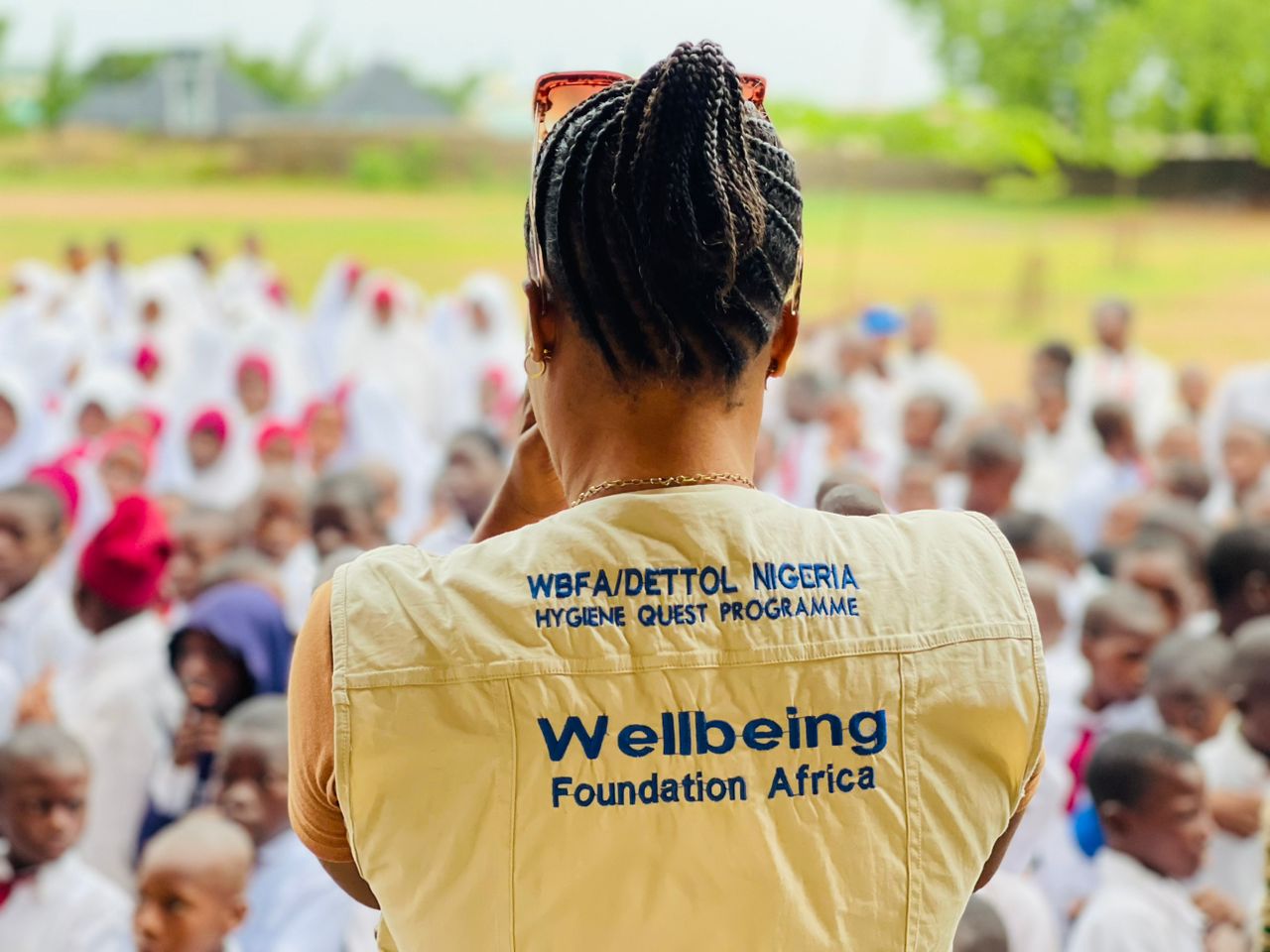
A 2025 study found that more than half of school-age girls in Nigeria miss school each month because sanitary products are unaffordable or unavailable. A girl who misses a week every month will, sooner or later, stop going at all. Founded in 2004 by Toyin Ojora Saraki as a maternal health charity, the Wellbeing Foundation Africa has built its work for girls on that insight. It runs school programmes on menstrual hygiene, nutrition and girls’ rights, and by its own account its Hygiene Quest curriculum has reached 57,900 girls in schools. The aim is that no Nigerian girl should have to choose between her dignity and her desk.

When the moon stopped talking: Africa's lost classroom of values
For generations, African children learnt right from wrong not from textbooks but from a grandmother’s voice under the full moon. Through the greedy tortoise and the cunning spider, they absorbed honesty, respect for elders and loyalty to the community, often without anyone spelling out the moral. Urbanisation, television, smartphones and the retreat of African languages have since silenced that nightly classroom. The moon still rises over every village and city. What is missing is the circle beneath it.
Can a screen fill Africa's empty teacher's desk? 18 Oct 2026 · @Richard Awoseyin
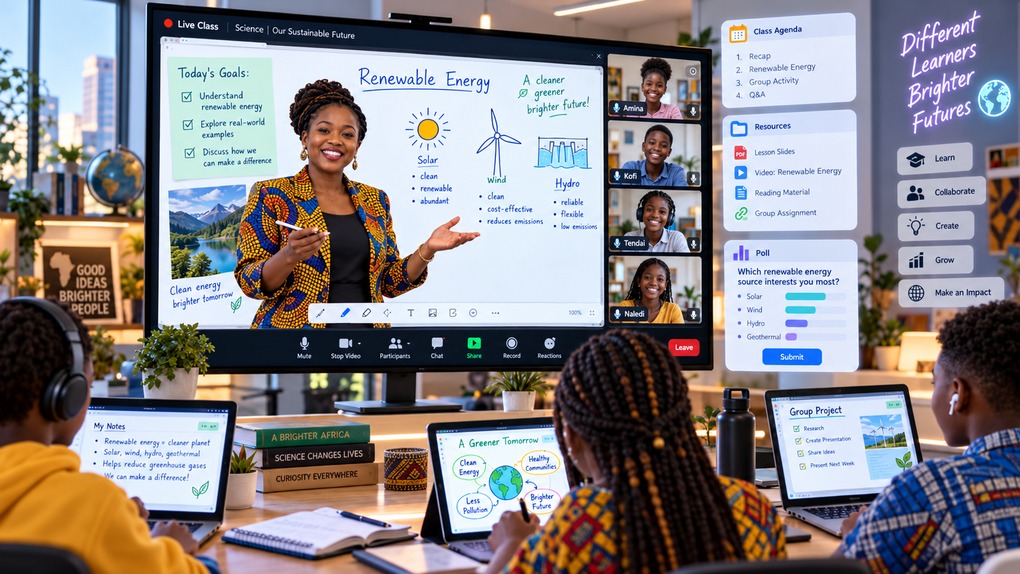
Sub-Saharan Africa needs 15 million more teachers by 2030, more than any other region, and it cannot train them fast enough. But a shortage of teachers is really a shortage of teaching, and teaching can travel. In Ghana, live satellite lessons from a studio in Accra raised rural pupils’ maths scores by about a quarter of a standard deviation. In Botswana, a weekly text message paired with a 20-minute phone call cut innumeracy by 31 per cent. Virtual classrooms will not replace Africa’s missing teachers. Used wisely, they can make every good one go much further.