The rise of artificial intelligence
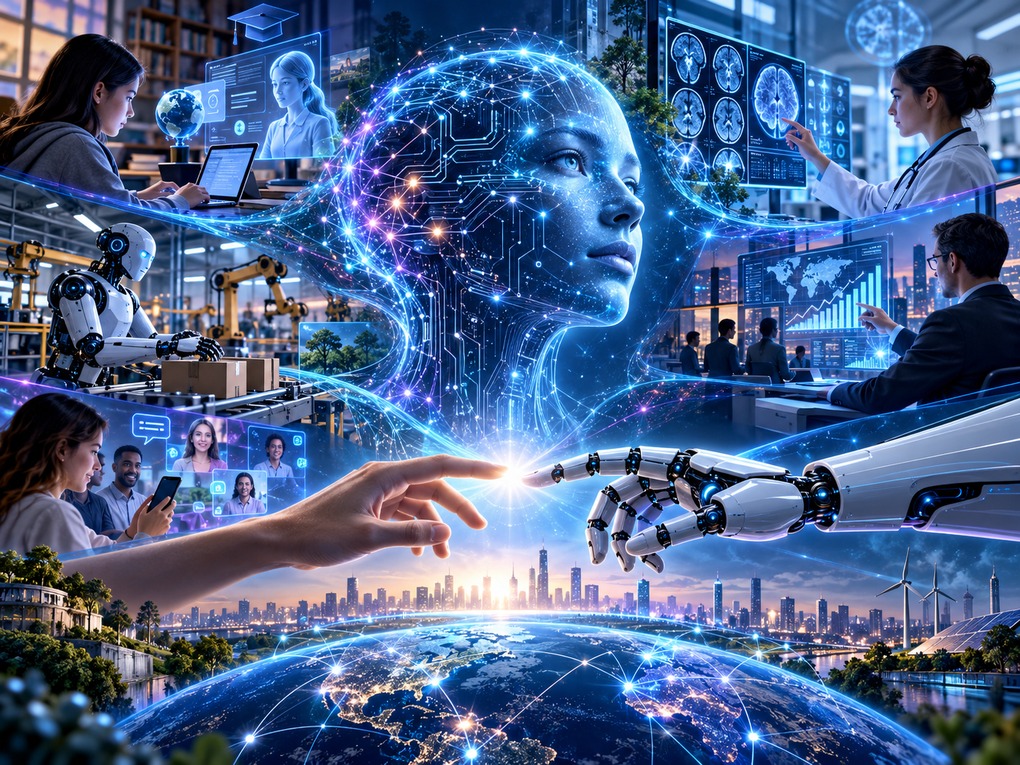
The world is experiencing one of the most significant technological transformations in human history. Artificial intelligence (AI), once considered a subject of scientific imagination, has become part of everyday life. From mobile phones and banking applications to hospitals, classrooms, industries and government institutions, AI is increasingly influencing how people live, learn, communicate and work.
Artificial intelligence refers to the ability of computer systems to perform tasks that ordinarily require human intelligence. These include learning, reasoning, recognising patterns, understanding language, solving problems and making predictions.
Applications such as ChatGPT, Google Gemini and Claude demonstrate how advanced technology has become capable of generating written content, analysing information, supporting software development and assisting with complex intellectual tasks.
The speed of adoption is remarkable. According to Stanford University's AI Index Report 2025, 78 per cent of surveyed organisations reported using AI in 2024, compared with 55 per cent in 2023. This demonstrates how rapidly businesses and institutions are integrating artificial intelligence into their operations.
However, as AI becomes increasingly powerful and accessible, a fundamental question arises: does artificial intelligence represent progress for humanity, or could excessive dependence on it create problems that outweigh its benefits?
Understanding its merits and demerits is essential to making informed decisions about its place in society.
The merits of artificial intelligence
Improving efficiency and productivity
One of the greatest advantages of artificial intelligence is its ability to perform complex and repetitive tasks quickly.
Activities that previously required several hours of human effort can sometimes be completed within minutes. Organisations use AI to analyse records, prepare reports, manage customer enquiries, detect errors and improve operational efficiency.
For instance, an educational institution processing examination results for thousands of students can use intelligent systems to identify inconsistencies, analyse performance trends and generate statistical reports.
Businesses can similarly automate routine processes, enabling employees to concentrate on activities requiring judgement, creativity and interpersonal skills.
These capabilities can increase productivity, reduce operating costs and improve service delivery. Nevertheless, AI-generated results must be independently verified, particularly where mistakes could affect people's lives.
Transforming education and learning
Education is one of the sectors with considerable potential to benefit from artificial intelligence.
Traditionally, students depended heavily on classroom instruction, textbooks and physical libraries. AI-powered learning platforms now provide additional opportunities for students to obtain explanations, practise difficult subjects and explore areas beyond their immediate curriculum.
A student struggling with mathematics, for example, can ask an AI system to explain a problem step by step, provide alternative methods and generate additional exercises.
Teachers can use AI to prepare lesson notes, design teaching materials, develop assessments and identify areas where students require additional support.
For students in remote communities with limited access to specialist teachers, AI-based educational resources could help address some learning gaps, provided that electricity, internet connectivity and appropriate devices are available.
UNESCO has acknowledged the potential of artificial intelligence to improve teaching and learning while emphasising that its application must remain human-centred, equitable and appropriately regulated.
Advancing healthcare and medical research
Artificial intelligence is also contributing to improvements in healthcare.
AI systems can assist medical professionals in analysing diagnostic images, identifying suspicious patterns and assessing potential health risks. Researchers can use the technology to examine large datasets, investigate diseases and accelerate aspects of drug discovery.
In communities where qualified medical specialists are scarce, responsibly designed AI tools could support healthcare workers with preliminary assessments and clinical decision-making.
However, AI cannot replace professional medical judgement. Inaccurate predictions, incomplete information or biased training data can produce dangerous outcomes if automated recommendations are accepted without proper evaluation.
Encouraging innovation and entrepreneurship
Artificial intelligence has created opportunities for entrepreneurs, software developers, researchers and small businesses.
Individuals can develop applications, create digital services, prepare marketing materials, analyse customer behaviour and automate selected business processes with fewer resources than were previously required.
A small business owner can use AI to prepare financial projections, develop promotional content or analyse sales patterns.
In agriculture, AI can support crop monitoring, weather-related planning, pest identification and resource management.
For developing economies such as Nigeria, these applications offer opportunities to improve productivity, strengthen local enterprises and encourage technology-driven entrepreneurship.
Improving research and access to information
AI can assist researchers in examining large volumes of information, summarising technical materials, analysing patterns and identifying relationships across datasets.
Students and professionals can also use AI to understand unfamiliar subjects and gain introductory knowledge in specialised fields.
This accessibility can encourage lifelong learning and help individuals acquire new skills.
Nevertheless, the accuracy of AI-generated material cannot be assumed. Information must still be checked against credible sources, particularly in scientific, legal and academic work.
The demerits of artificial intelligence
Threats to employment and job security
One of the most serious concerns surrounding artificial intelligence is its potential effect on employment.
As organisations adopt intelligent systems, certain administrative, clerical, customer service and routine analytical tasks may require fewer workers.
The International Monetary Fund estimated in 2024 that almost 40 per cent of jobs worldwide were exposed to AI, with the proportion reaching approximately 60 per cent in advanced economies. Exposure does not necessarily mean job losses; some occupations may become more productive while others face reduced demand.
International Monetary Fund
These developments raise concerns, especially for young graduates entering the labour market.
A company that previously employed several people to perform repetitive administrative tasks may eventually require fewer employees after introducing automation.
At the same time, AI is generating demand for skills in data science, cybersecurity, software engineering, machine learning and digital systems management.
This makes continuous education, retraining and professional adaptation increasingly important.
Decline in independent thinking and creativity
Another concern is the possibility that excessive dependence on artificial intelligence could weaken independent thinking.
Students can now ask AI systems to complete assignments, solve mathematical problems, prepare essays and even generate entire research projects.
While these tools can support learning, their misuse may prevent students from developing essential intellectual abilities.
A student who consistently submits AI-generated solutions without understanding the underlying concepts may obtain good grades while lacking the competence those grades are intended to represent.
Similarly, professionals who depend entirely on automated recommendations may gradually become less confident in making independent decisions.
Critical thinking, creativity, analytical reasoning and problem-solving must therefore remain central to education and professional development.
AI should support the learning process rather than replace the intellectual effort required to acquire knowledge.
Inaccurate information and misinformation
Despite its sophistication, artificial intelligence is not infallible.
Generative AI systems sometimes produce convincing but incorrect responses. They may invent references, misinterpret questions, provide inaccurate statistics or present unverified information as fact.
This problem becomes particularly dangerous when AI-generated content is used in healthcare, education, law, finance or public administration without independent verification.
AI can also be used to create misleading images, fabricated videos and false audio recordings, commonly referred to as deepfakes.
Such materials may be used to impersonate individuals, deceive the public, manipulate opinions or damage reputations.
The ability to distinguish authentic information from artificial content is becoming an essential digital literacy skill.
Privacy and data security concerns
Artificial intelligence depends extensively on information, including personal and institutional data.
When users submit confidential documents, student records, financial information or sensitive business materials to AI platforms, questions arise about how that information is processed, stored and protected.
Unauthorised disclosure or misuse of personal data could expose individuals and organisations to significant risks.
Educational institutions, for example, must exercise caution when using AI systems to process student records, examination results or personal information.
Strong data protection policies, secure systems, access controls and responsible information management are necessary.
Bias and unfair decision-making
Artificial intelligence learns patterns from the data used to develop and operate its models.
Where such data contains historical inequalities, inaccuracies or incomplete representation, AI systems may produce biased recommendations.
This can affect recruitment, lending, educational assessments and other decisions with significant consequences for individuals.
For example, an automated recruitment system trained on biased historical employment records could unfairly disadvantage qualified applicants from particular backgrounds.
Human oversight, representative data and regular system evaluation are therefore essential to reducing discriminatory outcomes.
Increasing inequality between developed and developing countries
Although AI offers substantial economic opportunities, the ability to benefit from it is not equally distributed.
Countries with reliable electricity, high-speed internet, advanced computing infrastructure and skilled professionals are better positioned to develop and adopt sophisticated AI technologies.
Many developing countries still struggle with inadequate infrastructure, limited digital literacy and expensive internet access.
Nigeria faces similar challenges, particularly in rural communities.
If these structural limitations are not addressed, artificial intelligence could widen the gap between technologically advanced societies and those with fewer resources.
The long-term implication is that economic opportunities may become increasingly concentrated in countries and organisations with the infrastructure and expertise to control and deploy AI effectively.
Artificial intelligence and the future of Nigerian education
For Nigeria, the discussion surrounding artificial intelligence must go beyond the excitement of technological innovation.
The country needs to consider how AI will affect its educational system, workforce and economic development.
Many Nigerian schools continue to face challenges involving inadequate infrastructure, insufficient teaching resources, limited computer facilities and irregular electricity supply.
Introducing AI into such an environment without addressing these fundamental problems could deepen educational inequalities.
Students attending well-equipped urban schools may gain access to advanced digital learning resources, while their counterparts in underserved communities remain excluded.
There is also the question of curriculum relevance.
For decades, students have been encouraged to pursue conventional professional courses without sufficient consideration of emerging technological opportunities.
Although medicine, law, engineering, accounting and other established disciplines remain important, their practice is changing under the influence of digital technology.
Future doctors may increasingly work with intelligent diagnostic systems. Engineers will apply AI-supported design and simulation tools. Lawyers will use advanced digital research applications, while accountants will rely on intelligent financial analysis systems.
Consequently, education must prepare students to work effectively with these technologies.
Artificial intelligence literacy, computational thinking, data analysis, cybersecurity awareness and digital ethics should become important elements of modern education.
However, introducing new subjects alone will not be sufficient.
Teachers require professional development, institutions need modern infrastructure, and students must be encouraged to develop practical skills.
The danger of producing educated but intellectually dependent graduates
Perhaps one of the most important challenges posed by artificial intelligence is its potential influence on the quality of education.
The purpose of education extends beyond obtaining certificates. It involves developing understanding, judgement, discipline, creativity and the ability to solve real-world problems.
When students rely excessively on AI to perform their academic responsibilities, there is a danger of producing graduates whose qualifications do not reflect their actual competence.
A student who submits an AI-generated programming project without understanding the code may struggle when asked to develop or maintain software independently.
Similarly, a student who uses AI to complete mathematical assignments without studying the methods involved may perform poorly when confronted with unfamiliar problems.
Educational institutions must therefore reconsider how learning is assessed.
Greater emphasis should be placed on practical demonstrations, oral examinations, project defence, laboratory activities, problem-solving exercises and continuous assessments that establish what students genuinely understand.
The responsible use of AI should be taught as part of academic integrity rather than treated simply as a disciplinary issue.
The objective should be to produce graduates capable of using AI intelligently while retaining the ability to reason and work independently.
Can artificial intelligence replace human intelligence?
Artificial intelligence can outperform humans in certain narrowly defined activities, particularly those involving rapid computation, large-scale data processing and pattern recognition.
However, high performance in such tasks does not automatically amount to the full range of human intelligence.
Human decision-making involves lived experience, social understanding, moral responsibility, contextual judgement and interpersonal relationships.
AI can generate advice, but responsibility for important decisions must remain with people and accountable institutions.
For instance, an AI system may recommend medical treatment options, but a qualified healthcare professional must evaluate their suitability for a particular patient.
An AI application may analyse examination results, but educational authorities remain responsible for ensuring that the assessment rules are correct and that students are treated fairly.
The most productive approach is therefore to combine technological capability with human expertise and accountability.
Striking the right balance
The increasing adoption of artificial intelligence is unlikely to reverse. Governments, institutions, businesses and individuals must therefore develop the capacity to use it responsibly.
Nigeria should prioritise investment in digital infrastructure, teacher training, technological research and practical skills development.
Educational authorities should establish clear guidelines for the acceptable use of AI in teaching, learning, examinations and research.
Businesses should adopt AI with consideration for employee training and workforce transition, while regulatory institutions must strengthen safeguards against misuse, discrimination and privacy violations.
Parents also have an important responsibility.
Children should be taught that AI is a learning resource, not an excuse to avoid studying, researching or thinking independently.
Technology should improve human capability without undermining the personal discipline required for intellectual development.
Conclusion
Artificial intelligence is one of the most consequential technological developments of the modern era. Its ability to improve productivity, support research, transform education, advance healthcare and create business opportunities offers enormous potential for human development.
Nevertheless, its disadvantages cannot be ignored. Job displacement, misinformation, data insecurity, algorithmic bias, educational malpractice and excessive intellectual dependence present challenges that demand serious attention.
The future of artificial intelligence will depend significantly on how individuals, institutions and governments choose to develop, regulate and apply it.
For Nigeria, the priority must be to prepare citizens, particularly young people, to participate meaningfully in an economy increasingly influenced by intelligent technologies.
This requires investment in education, reliable infrastructure, digital skills and effective public policy.
Ultimately, the real measure of progress in artificial intelligence should not be how many tasks machines can perform, but how effectively the technology improves human knowledge, productivity, opportunity and well-being.
Artificial intelligence should remain a tool for advancing human development, with human judgement, creativity and responsibility at the centre of its application.
Related in Education

Keeping girls in the classroom: the Wellbeing Foundation's quiet revolution
A 2025 study found that more than half of school-age girls in Nigeria miss school each month because sanitary products are unaffordable or unavailable. A girl who misses a week every month will, sooner or later, stop going at all. Founded in 2004 by Toyin Ojora Saraki as a maternal health charity, the Wellbeing Foundation Africa has built its work for girls on that insight. It runs school programmes on menstrual hygiene, nutrition and girls’ rights, and by its own account its Hygiene Quest curriculum has reached 57,900 girls in schools. The aim is that no Nigerian girl should have to choose between her dignity and her desk.

When the moon stopped talking: Africa's lost classroom of values
For generations, African children learnt right from wrong not from textbooks but from a grandmother’s voice under the full moon. Through the greedy tortoise and the cunning spider, they absorbed honesty, respect for elders and loyalty to the community, often without anyone spelling out the moral. Urbanisation, television, smartphones and the retreat of African languages have since silenced that nightly classroom. The moon still rises over every village and city. What is missing is the circle beneath it.
Can a screen fill Africa's empty teacher's desk? 18 Oct 2026 · @Richard Awoseyin
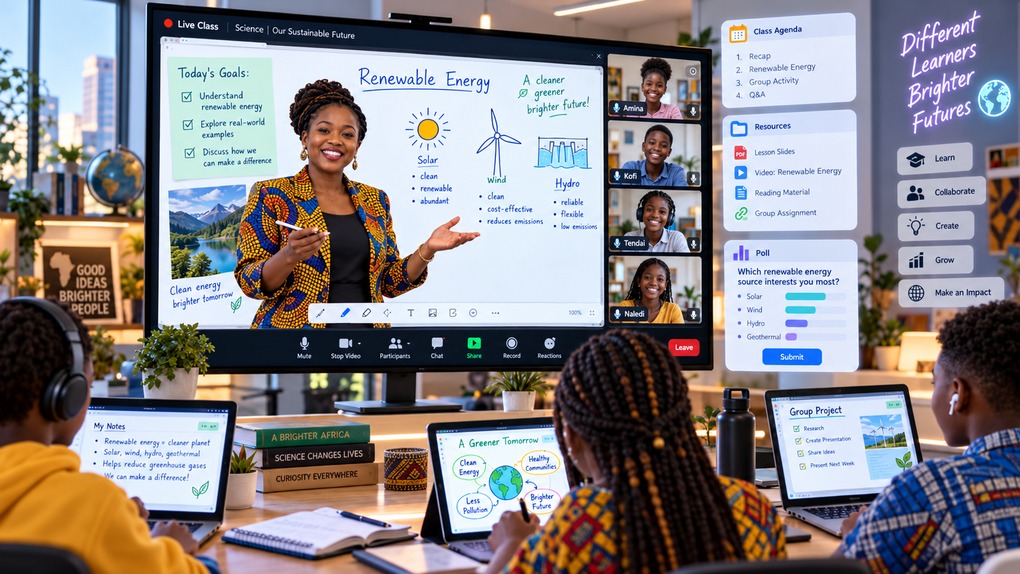
Sub-Saharan Africa needs 15 million more teachers by 2030, more than any other region, and it cannot train them fast enough. But a shortage of teachers is really a shortage of teaching, and teaching can travel. In Ghana, live satellite lessons from a studio in Accra raised rural pupils’ maths scores by about a quarter of a standard deviation. In Botswana, a weekly text message paired with a 20-minute phone call cut innumeracy by 31 per cent. Virtual classrooms will not replace Africa’s missing teachers. Used wisely, they can make every good one go much further.