The world is changing what it teaches
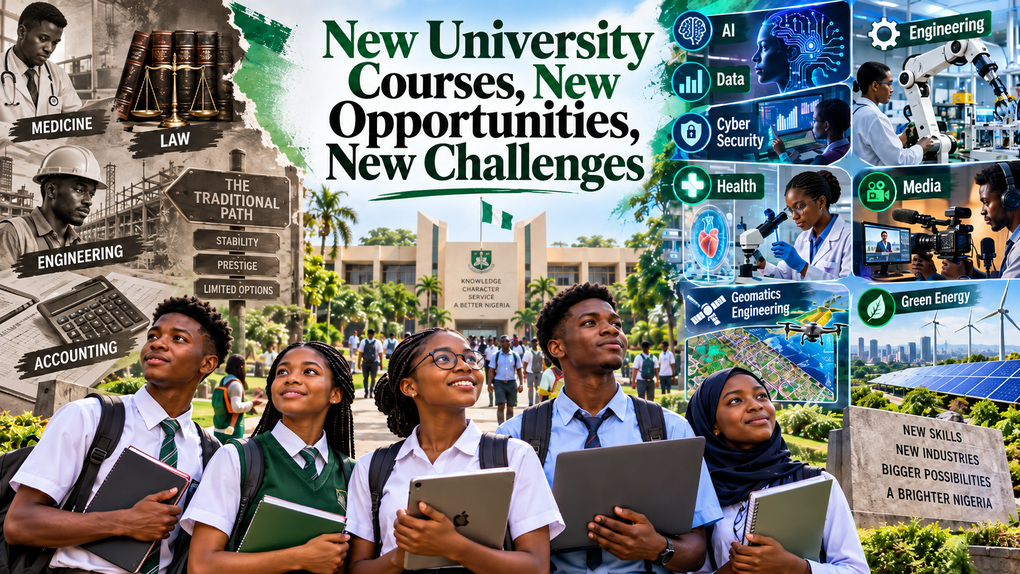
Thirty years ago, a Nigerian secondary school leaver had a short list of “respectable” courses: Medicine, Law, Engineering, Accounting. Many parents still hold that list close. But the world those courses were designed for is fading, and the world of work that is replacing it runs increasingly on data, software and artificial intelligence.
The numbers are striking. The World Economic Forum’s Future of Jobs Report 2025 estimates that by 2030 about 170 million new jobs will be created worldwide while about 92 million disappear, a net gain of roughly 78 million. It also expects close to 39 percent of today’s core skills to change or become outdated in the same period. The fastest-growing roles are AI engineers, data analysts and green-energy specialists. The fastest-shrinking are clerical, postal and routine administrative jobs.
Education systems are responding, and quickly. China made AI education compulsory in all primary and secondary schools from 1 September 2025, with at least eight hours a year, starting from age six. The United Arab Emirates made AI a formal subject in public schools from kindergarten to Grade 12 in the 2025–2026 session, with a quarter of the content devoted to ethics. In the United States, Ohio State University announced that, from the cohort entering in 2025, every undergraduate is expected to graduate fluent in using AI within their own field.
The pattern is clear. Countries are not simply adding a computer class. They are rewriting curricula, retiring outdated content, and redesigning old courses so that AI and digital skills run through them. Courses that once trained people for routine paperwork are being rebuilt around analysis, automation and problem-solving.
Nigeria’s response: a new rulebook and new degrees
Nigeria has not stood still. The National Universities Commission (NUC), the body that approves every university programme in the country, introduced a new Core Curriculum and Minimum Academic Standards (CCMAS). The new framework did three things. It created new programmes for new industries. It broke some broad courses into deeper, specialised degrees. And it built practical skills and entrepreneurship into the curriculum, so that graduates can create jobs rather than only seek them.
The most visible example of unbundling is Mass Communication, now split into seven degrees: Journalism and Media Studies, Public Relations, Advertising, Broadcasting, Film and Multimedia Studies, Development Communication Studies, and Information and Media Studies. Universities not yet equipped for the split may still run the original programme.
In 2025, after a curriculum review involving experts from across the university system, the NUC approved a further set of new degrees. These include B.Sc. Artificial Intelligence, B.Sc. Telecommunication Science, B.Sc. Intelligence and Security Studies, B.Eng. Geomatics Engineering, Community Health Sciences, and Parasitology and Entomology. They sit alongside programmes such as Cyber Security, Software Engineering, Data Science and Mechatronics that universities have been rolling out under the new framework.
The approvals are now reaching campuses. For the 2026/2027 session, the NUC cleared Kwara State University to start new programmes including Computer Engineering, Biomedical Engineering and Nursing Science. It approved Artificial Intelligence and Pharmacology at Ajayi Crowther University, and Nuclear Engineering and Automotive Engineering at the University of Nigeria, Nsukka. Each approval follows a resource verification visit, because a course on paper is worthless without the lecturers and laboratories to teach it.
The challenges are real
New courses bring new hurdles, and students should see them clearly.
Availability: A programme approved nationally is not automatically offered everywhere. Each university must pass its own NUC verification, so applicants must confirm a course is running before choosing it on their JAMB form.
Capacity: Fields such as AI and cyber security need specialist lecturers and modern laboratories. Some universities are still building both.
Foundations: Almost every tech-driven course demands strong credits in Mathematics and English, and many students are weakest exactly there.
Information gaps: Many parents and some teachers have never heard of Mechatronics or Geomatics, so students are steered back to the familiar list.
Rules and cost: Government has kept 16 as the minimum admission age, and the 2026 minimum JAMB score for universities is 150, though competitive courses demand far more. Fees, accommodation, data and unstable power add further strain.
The opportunities are bigger
For students willing to prepare, the opportunities far outweigh the obstacles.
First, there are more doors. When one course becomes seven and new degrees open each year, admission is no longer a fight over a handful of programmes. A student who misses Medicine can find a strong path in Public Health, Pharmacology or Biomedical Engineering.
Second, these skills are in demand at home and abroad. Banks need cyber security experts, telecom firms need engineers, hospitals need health-data specialists, and government needs analysts. Digital skills can also be sold across borders, so a young Nigerian can work for a foreign company without leaving home.
Third, the new curriculum prepares graduates to employ others. A Film and Multimedia graduate can open a studio. An Agribusiness graduate can process, brand and export farm produce. A Software Engineering graduate can build the tools local markets need.
Fourth, money is less of a barrier than before. The Nigerian Education Loan Fund (NELFUND) provides loans for tuition and monthly upkeep to students in public tertiary institutions, repayable after graduation and employment. By June 2026, about 1.5 million students in 288 institutions had benefited.
What students should do now
The students who gain most will be those who start early. Choose subjects in SS1 that match the course you want. Strengthen Mathematics and English. Learn one practical digital skill. Check the JAMB brochure for exact subject requirements, and confirm which universities actually run your course.
The world is rewriting its curriculum around artificial intelligence. Nigeria has begun to do the same. The question for every Nigerian student is no longer which course is most respected, but which future they are preparing for, and whether they will start preparing today.
Related in Education
Keeping girls in the classroom: the Wellbeing Foundation's quiet revolution
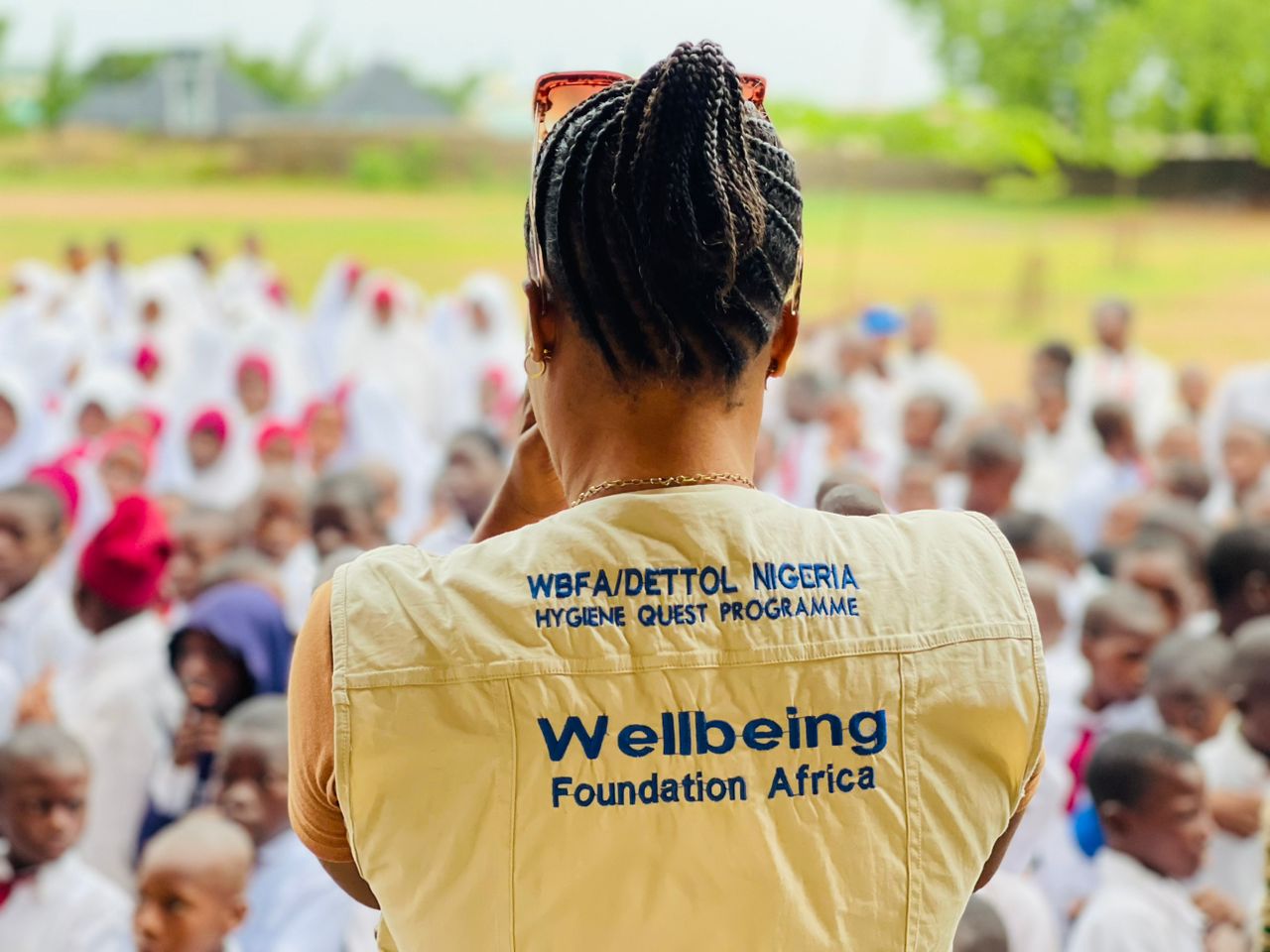
A 2025 study found that more than half of school-age girls in Nigeria miss school each month because sanitary products are unaffordable or unavailable. A girl who misses a week every month will, sooner or later, stop going at all. Founded in 2004 by Toyin Ojora Saraki as a maternal health charity, the Wellbeing Foundation Africa has built its work for girls on that insight. It runs school programmes on menstrual hygiene, nutrition and girls’ rights, and by its own account its Hygiene Quest curriculum has reached 57,900 girls in schools. The aim is that no Nigerian girl should have to choose between her dignity and her desk.

When the moon stopped talking: Africa's lost classroom of values
For generations, African children learnt right from wrong not from textbooks but from a grandmother’s voice under the full moon. Through the greedy tortoise and the cunning spider, they absorbed honesty, respect for elders and loyalty to the community, often without anyone spelling out the moral. Urbanisation, television, smartphones and the retreat of African languages have since silenced that nightly classroom. The moon still rises over every village and city. What is missing is the circle beneath it.

Can a screen fill Africa's empty teacher's desk? 18 Oct 2026 · @Richard Awoseyin
Sub-Saharan Africa needs 15 million more teachers by 2030, more than any other region, and it cannot train them fast enough. But a shortage of teachers is really a shortage of teaching, and teaching can travel. In Ghana, live satellite lessons from a studio in Accra raised rural pupils’ maths scores by about a quarter of a standard deviation. In Botswana, a weekly text message paired with a 20-minute phone call cut innumeracy by 31 per cent. Virtual classrooms will not replace Africa’s missing teachers. Used wisely, they can make every good one go much further.